There are wars fought with weapons, and there are wars fought with honor. Chief of War (2025) stands at the crossroads of both — a sweeping historical epic that tears open the soul of a nation as it’s born from blood, betrayal, and destiny. Starring Jason Momoa in his most commanding role to date, this is not merely a film about conquest; it’s a chronicle of identity, resilience, and the heavy price of sovereignty.

Set in 18th-century Hawaii, Chief of War reimagines the rise of a unified kingdom under one man’s vision. Momoa plays Ka’iana, a fearless warrior torn between loyalty to his people and the brutal forces of colonization that threaten to rewrite their future. Through his eyes, we witness the transformation of paradise into a battlefield, where courage must confront cruelty and culture must fight to survive.
The film opens in silence — waves crashing, wind whispering through palm fronds, and then the low beat of drums. From that moment, you feel the world breathing, ancient and alive. Every frame is drenched in natural majesty: volcanic ridges burning at sunset, ocean horizons stretching beyond reach, and warriors silhouetted in the dying light. This is not just cinematography; it’s reverence.
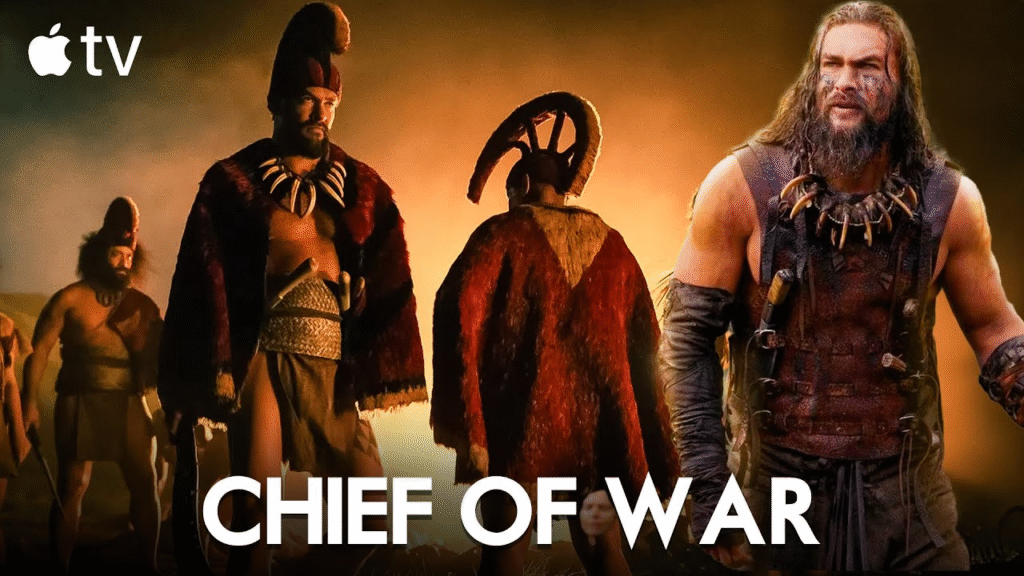
Director Francis Lawrence crafts each sequence like a ritual. Battle scenes unfold with visceral poetry — spears clashing beneath torrential rain, chants echoing through the night. Yet it’s in the quiet moments that Chief of War truly reigns: the shared glances of families awaiting news, the whispered prayers to ancestors, the trembling hands that hold both fear and faith.
Momoa’s performance is magnetic. He embodies Ka’iana with gravity and grace, his presence both regal and raw. You see the burden of leadership in every breath, the heartbreak of a man who must sacrifice peace to earn it. Opposite him, Temuera Morrison delivers a masterclass in restraint as the elder chief who knows that every victory costs a piece of one’s soul.
The supporting cast deepens the story’s resonance — Auli’i Cravalho shines as Leilani, a healer and spiritual anchor torn between love and prophecy, while Cliff Curtis brings fierce moral complexity as a rival chieftain whose pride blinds him to the encroaching storm. Together, they weave a tapestry of loyalty and loss that feels both mythic and human.
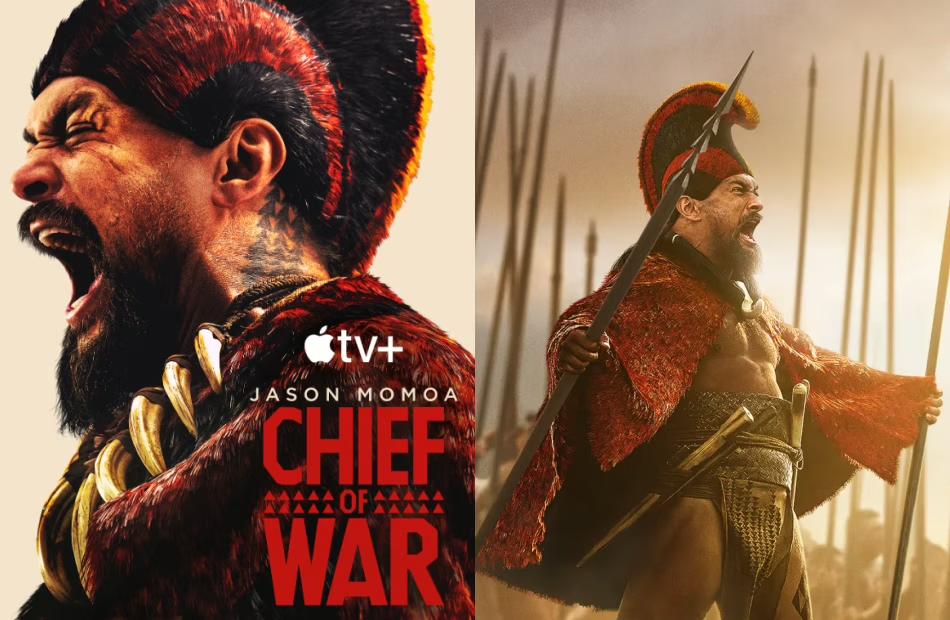
Beneath its grand scale lies a philosophical heartbeat. Chief of War asks: what does it mean to protect your people when the world itself is changing? The film doesn’t glorify violence; it mourns it. Every battle feels earned, every death remembered. In a time when war stories often chase spectacle, this one chases truth.
The score, composed by Hans Zimmer with Polynesian choral elements, thunders like the heartbeat of the earth. Drums merge with ocean waves, chants with sorrowful strings — it’s music that feels elemental, reminding us that this story was never about one man, but about a land’s eternal spirit refusing to be silenced.
As the final act unfolds, Ka’iana stands alone before an empire that seeks to erase everything he loves. Yet even in defeat, there’s triumph — the realization that legacy cannot be conquered, only remembered. The ocean claims his body, but the land keeps his name. And as dawn breaks over the islands, the echoes of his defiance become the foundation of a nation.
Chief of War (2025) is not just an action epic; it’s a requiem for heritage, a hymn to those who fought so their descendants could stand free. It leaves the audience humbled — not by the size of its battles, but by the depth of its heart.
⭐ Rating: ★★★★★ — A thunderous, soul-stirring masterpiece. A story of kings, but more importantly, of the land that made them.
