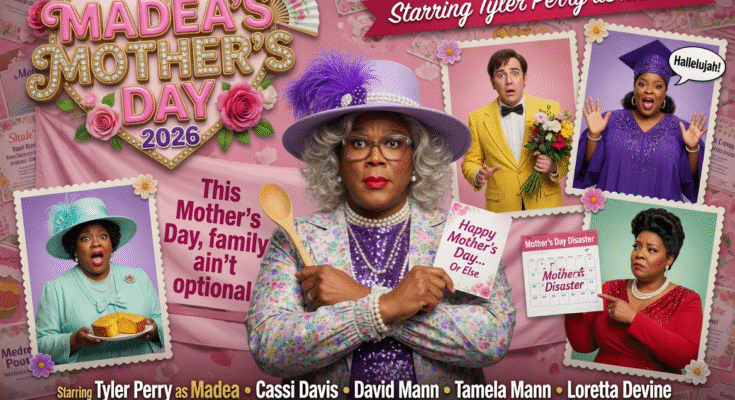
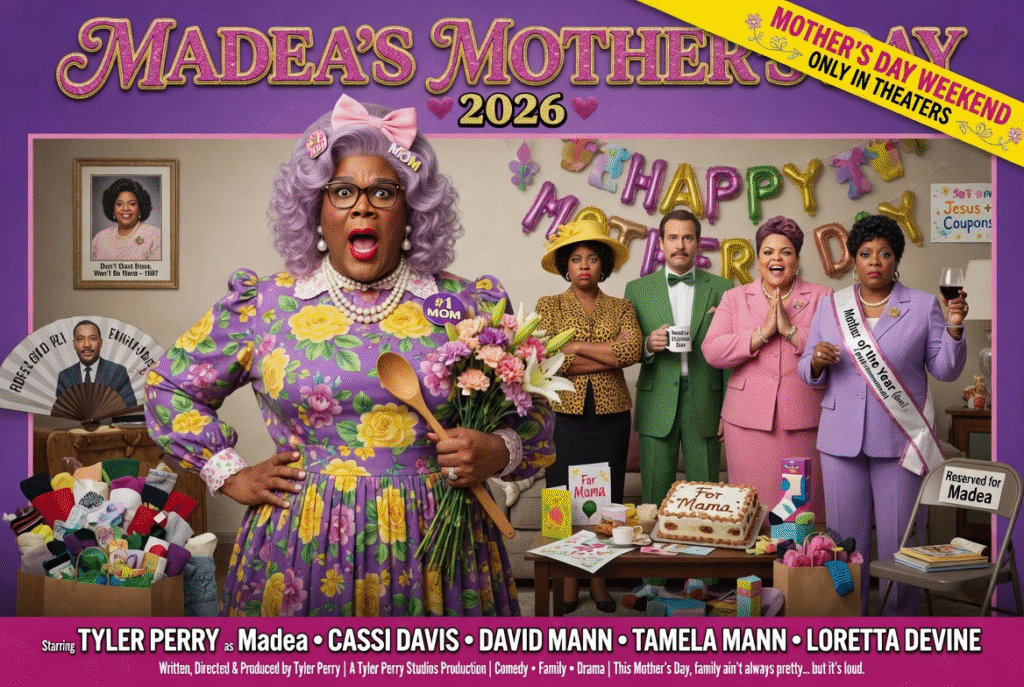
There are movies that try to impress you with spectacle, and then there are movies like Madea’s Mother’s Day that win you over with something much more difficult to fake — heart. Tyler Perry returns once again as the unstoppable Madea, bringing with her the same explosive humor, outrageous honesty, and emotional warmth that have kept audiences attached to this character for decades. But beneath the laughter and family chaos lies a surprisingly tender reflection on motherhood, forgiveness, and the messy beauty of staying connected even when everything falls apart.
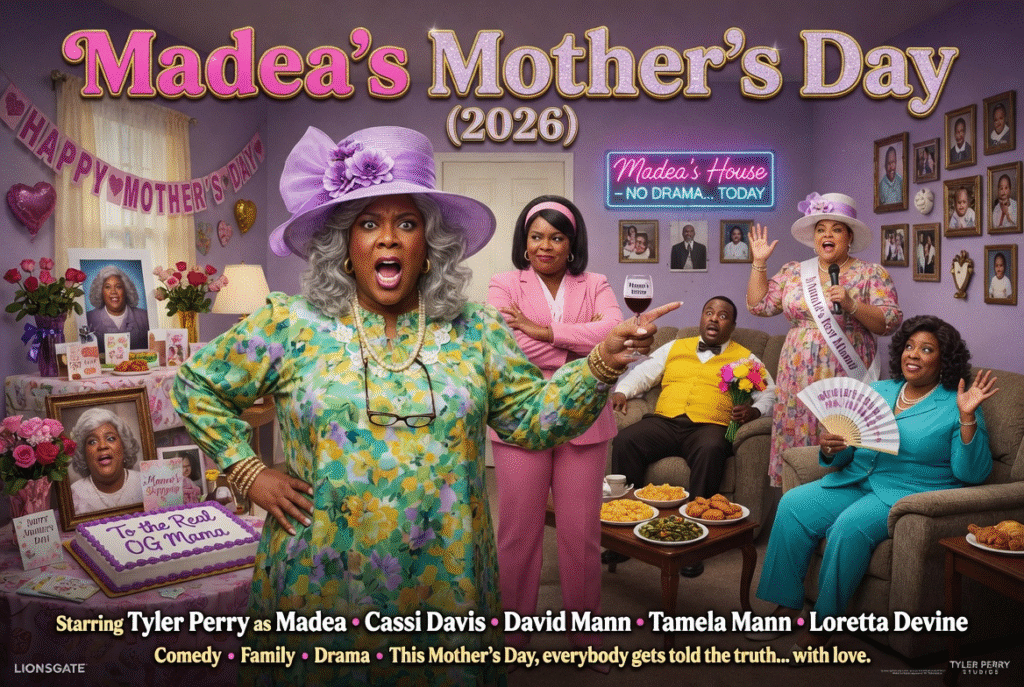
The story unfolds during what is supposed to be a peaceful Mother’s Day weekend reunion. Of course, peace never survives long in a Madea movie. Relatives arrive carrying secrets, unresolved grudges, financial problems, broken relationships, and enough emotional baggage to fill an entire house before the food even reaches the table. What begins as a celebration slowly transforms into a hilarious emotional battlefield where every family member is forced to confront truths they’ve spent years avoiding.
Tyler Perry understands something many modern comedies forget — the funniest moments often come from pain people recognize. Madea’s insults are wild, exaggerated, and brutally funny, but they work because they feel rooted in reality. She says the things everyone is too afraid to admit out loud. Every argument around the dinner table feels chaotic in the most authentic way possible, almost as if the audience has accidentally walked into a real family gathering where emotions are constantly balancing between laughter and disaster.
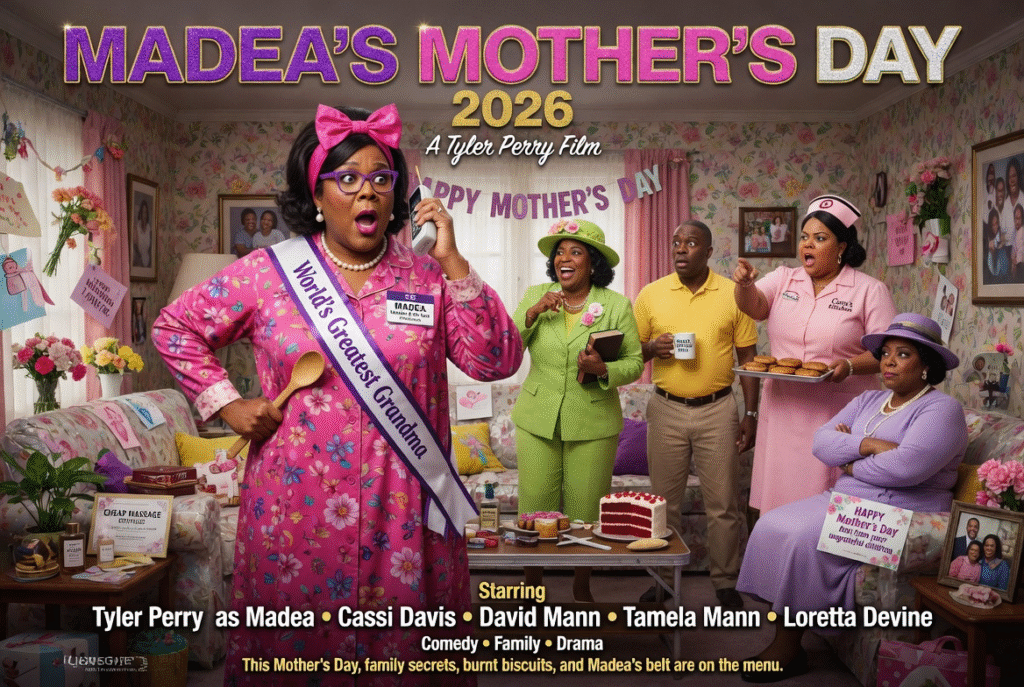
Cassi Davis and David Mann once again bring irresistible chemistry to the screen. Their comedic timing feels effortless, creating scenes that genuinely feel alive rather than scripted. Tamela Mann adds emotional depth beneath the humor, grounding the film whenever the chaos threatens to become overwhelming. And Loretta Devine delivers one of the film’s most touching performances, portraying a woman quietly carrying years of sacrifice behind her smile. Together, the cast transforms the movie into something more than a comedy — it becomes a portrait of generational love and exhaustion.
What makes Madea’s Mother’s Day surprisingly effective is how unafraid it is to slow down. Between the jokes and outrageous confrontations are moments of silence that carry real emotional weight. Conversations about absent parents, aging mothers, loneliness, and regret hit harder because they arrive unexpectedly. The film reminds viewers that family wounds rarely disappear completely; they simply learn how to hide beneath traditions, celebrations, and forced smiles.
Visually, the movie embraces warmth rather than glamour. The homes feel lived in, the family gatherings feel crowded and imperfect, and the atmosphere carries the comforting familiarity of old memories. Nothing feels polished to artificial perfection, which actually strengthens the emotional realism of the story. The film understands that family is rarely elegant — it is noisy, exhausting, frustrating, and somehow still comforting.
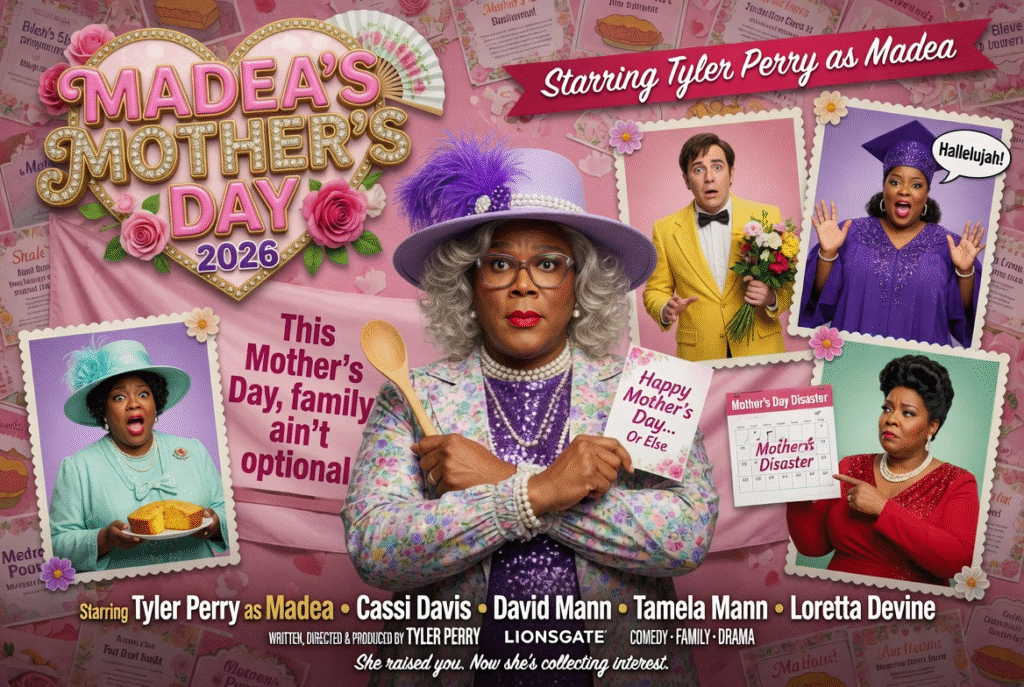
The humor remains classic Madea chaos. Explosive arguments erupt over tiny misunderstandings. Old rivalries resurface at the worst possible moments. Someone is always yelling, someone is always offended, and Madea stands in the center of it all like a comedic hurricane armed with wisdom, threats, and unforgettable one-liners. Yet even during its most ridiculous scenes, the film never loses sight of its emotional core.
One of the movie’s strongest themes is the invisible labor of mothers — the sacrifices that often go unnoticed until families are on the verge of breaking apart. The script quietly asks an uncomfortable question: how often do people celebrate mothers while simultaneously ignoring everything they endure? Beneath all the comedy, the film becomes a tribute to women who spend years holding families together even while carrying their own silent pain.
Tyler Perry’s storytelling has always connected deeply with audiences because he understands emotional familiarity better than spectacle. Madea’s Mother’s Day does not try to reinvent cinema or chase complexity for the sake of appearing important. Instead, it focuses on recognizable human emotions: guilt, love, pride, resentment, loyalty, and forgiveness. That emotional honesty is what gives the film its unexpected power.
By the final act, the laughter begins to feel different. The jokes remain, but they are layered with understanding. The characters finally begin seeing each other beyond old arguments and defensive walls. And in those final emotional moments, the film quietly reveals its true message — family is not defined by perfection, but by the decision to keep showing up for each other despite every reason to walk away.
Madea’s Mother’s Day is funny, loud, chaotic, sentimental, and unapologetically emotional. It may not be subtle, but it does not need to be. Like Madea herself, the film arrives with overwhelming energy, says exactly what it wants to say, and somehow leaves behind warmth long after the credits roll. It is a celebration of mothers, flawed families, second chances, and the strange miracle that love can survive even the messiest storms.
