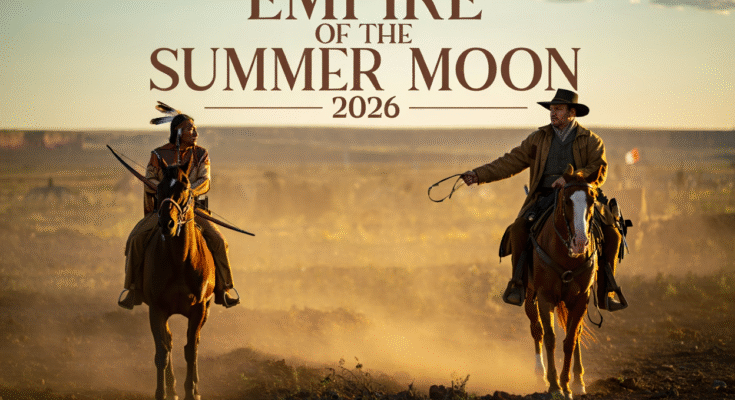
There’s a certain myth that has long defined the American West—a story of expansion, of destiny, of conquest. Empire of the Summer Moon doesn’t just challenge that myth—it dismantles it, piece by piece, revealing a history shaped not by triumph, but by collision.
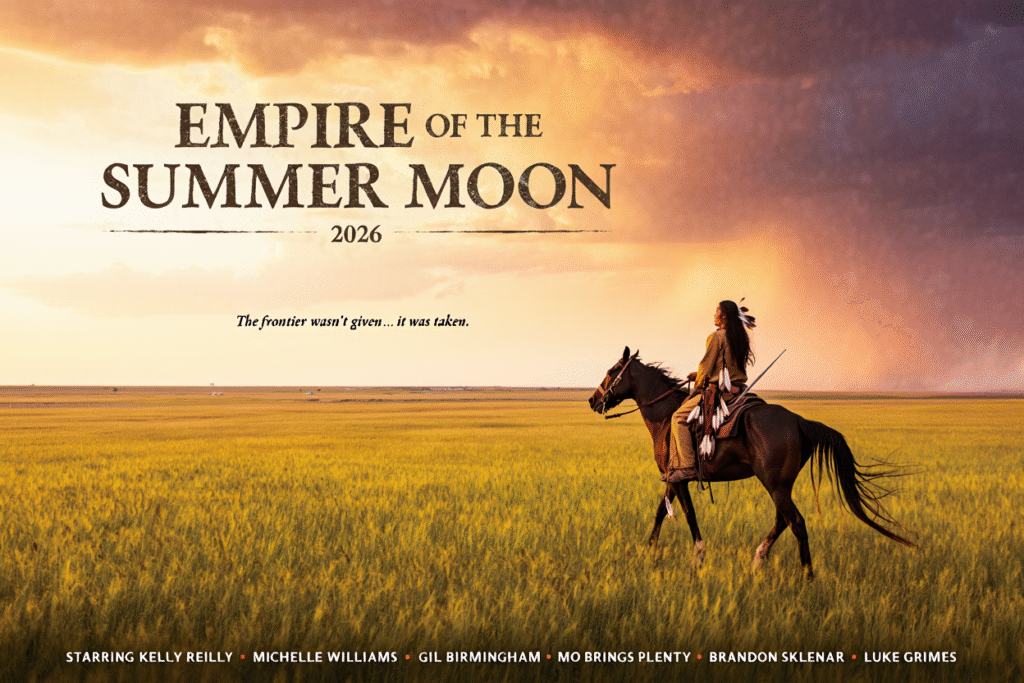
From its opening, the film carries a weight that feels undeniable. The land is vast, beautiful, and unforgiving—but more importantly, it is claimed. Not in the sense of ownership, but in identity. For the Comanche nation, this is not territory—it is existence itself.
At the center stands Quanah Parker, portrayed with commanding intensity. He is not simply a leader—he is a symbol of resistance, of survival in a world that is rapidly shifting beyond recognition. His strength is not just physical, but deeply rooted in purpose.
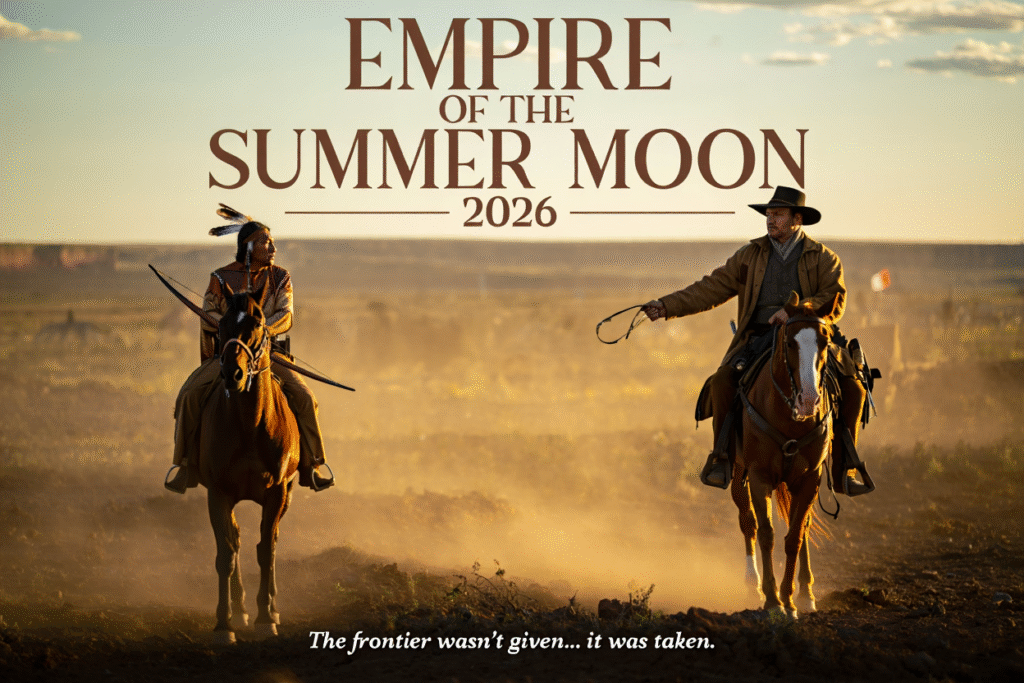
The film doesn’t romanticize conflict. Every battle feels costly, every victory incomplete. There’s a lingering sense that survival itself is the only measure of success—and even that comes with sacrifice.
Cynthia Ann Parker’s story provides the emotional core of the narrative. Through her journey, the film explores the fragile space between two worlds—where identity is no longer fixed, but constantly questioned. Her experience isn’t just personal—it reflects the broader tragedy of cultural displacement.
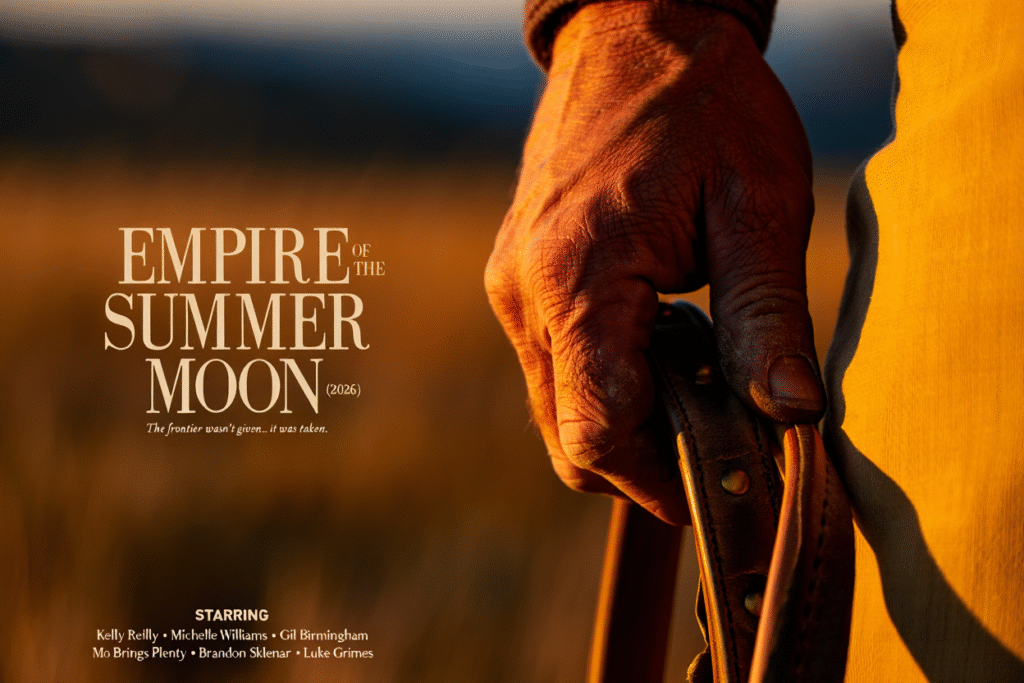
Kelly Reilly and Michelle Williams bring depth and nuance to the story, portraying characters shaped by forces beyond their control. Their performances add layers of complexity, reminding us that history is rarely defined by simple heroes or villains.
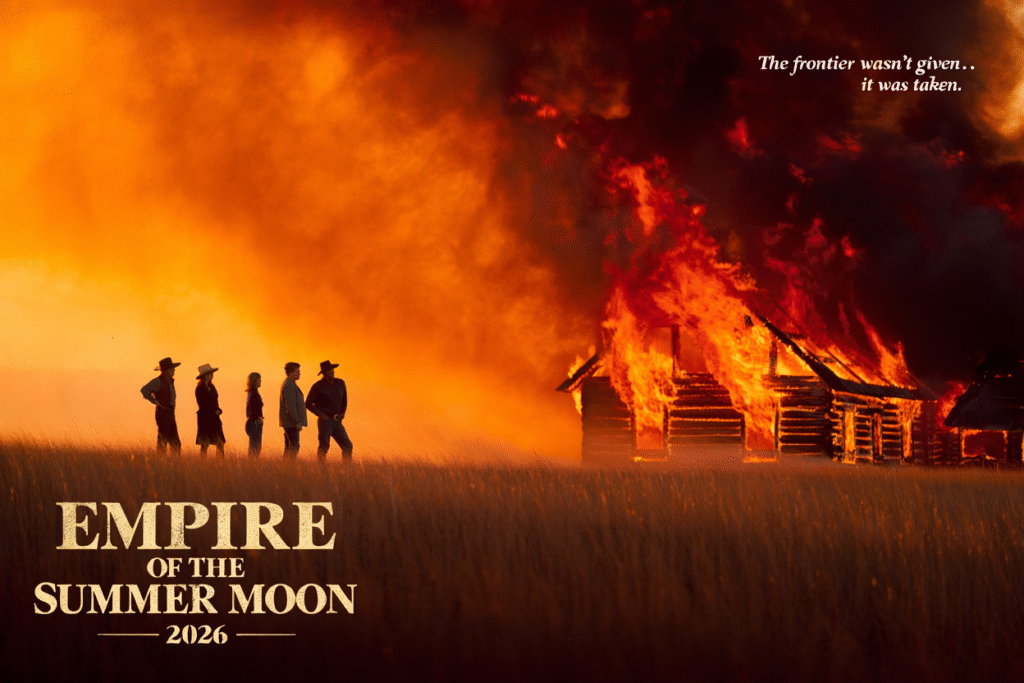
Gil Birmingham and Mo Brings Plenty ground the film in authenticity, their presence reinforcing the cultural and emotional stakes at play. There’s a quiet strength in their performances—one that doesn’t demand attention, but holds it.
Visually, the film is both breathtaking and brutal. Wide landscapes capture the beauty of the land, while moments of conflict reveal its harsh reality. It’s a world that feels alive—but constantly under threat.
The tagline, “The frontier wasn’t given… it was taken,” resonates through every frame. It reframes the narrative, forcing the audience to reconsider what they think they know about this period in history.
What makes Empire of the Summer Moon so powerful is its refusal to simplify. It doesn’t offer easy answers or clear resolutions. Instead, it presents a story shaped by loss, resilience, and the enduring fight to preserve identity.
The pacing allows the weight of each moment to settle. There’s no rush to move forward—because every step forward comes at a cost that must be acknowledged.
Emotionally, the film lingers. It doesn’t just tell a story—it invites reflection. On history, on perspective, and on the voices that have too often been overlooked.
By the end, Empire of the Summer Moon feels less like a film and more like a reckoning. A reminder that when two worlds collide, the outcome is never clean—and the consequences never truly fade.
Because this isn’t just a story about the past…
it’s about understanding what was lost—and what still endures.
#EmpireOfTheSummerMoon #WesternDrama #fblifestyle
