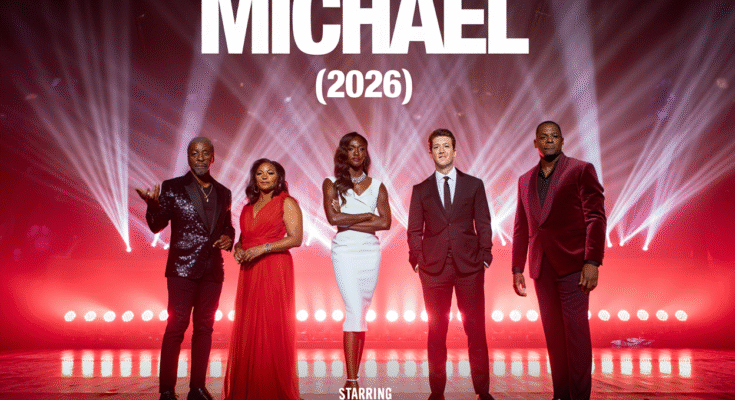
There are biopics, and then there are films that attempt to capture someone almost too large for cinema itself. Michael (2026) takes on that impossible task with ambition, spectacle, and enormous pressure. Led by Jaafar Jackson in his film debut, alongside Nia Long, Laura Harrier, Miles Teller, and Colman Domingo, the film sets out to tell the story of one of the most famous and complicated entertainers in history: Michael Jackson.
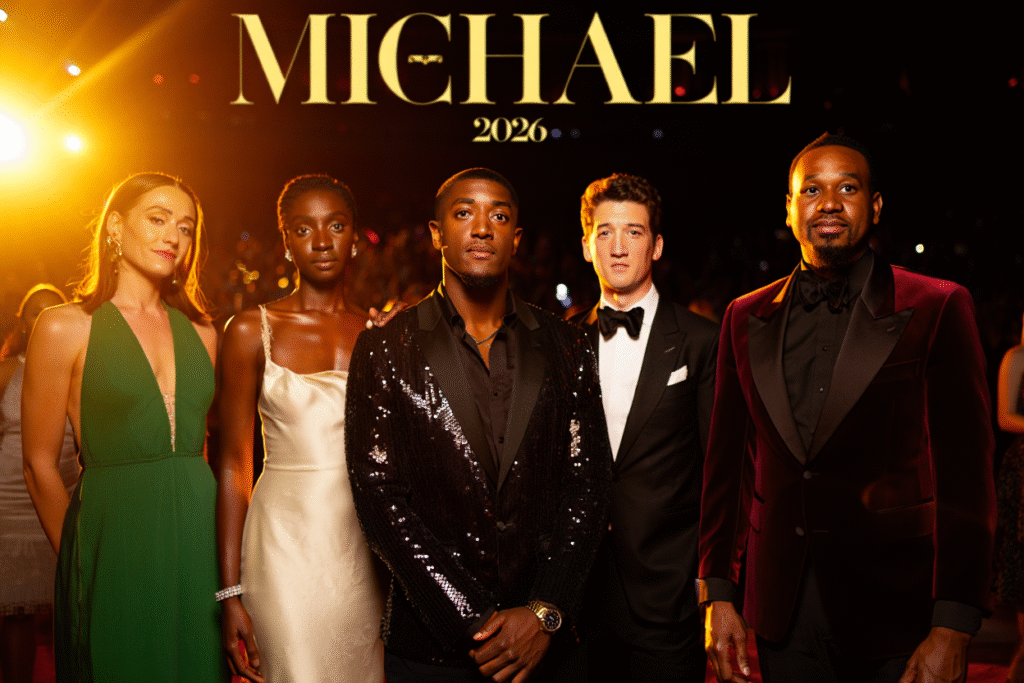
Directed by Antoine Fuqua, the film reportedly focuses primarily on Jackson’s rise from child star in the Jackson 5 to global superstardom in the 1980s, ending before the later controversies that would define so much of the public conversation around him.
Jaafar Jackson carries the burden of the film on his shoulders, and perhaps no casting choice could have generated more curiosity. As Michael’s real-life nephew, he brings not only a physical resemblance, but also a familiarity with the mannerisms, voice, and movement that made his uncle unforgettable. Early reactions suggest his performance may be the film’s greatest strength — not because he imitates Michael perfectly, but because he seems to capture the strange vulnerability behind the icon.

Colman Domingo, as Joe Jackson, appears poised to deliver one of the film’s most emotionally charged performances. Joe has long existed in the public imagination as both architect and tormentor — the man who pushed his children toward greatness while shaping the trauma that followed them. Domingo has the presence to make that contradiction feel deeply human.
Nia Long brings warmth and dignity as Katherine Jackson, the quiet force within the family. While the film is expected to focus heavily on Michael’s music and stardom, Katherine’s role may end up being one of its emotional anchors — the person trying to preserve humanity inside a machine built for fame.
Laura Harrier, playing music executive Suzanne de Passe, and Miles Teller, as longtime adviser John Branca, help frame the business side of Michael’s rise. Their characters represent the people who helped build the myth, manage the empire, and shape the image that would eventually become larger than the man himself.
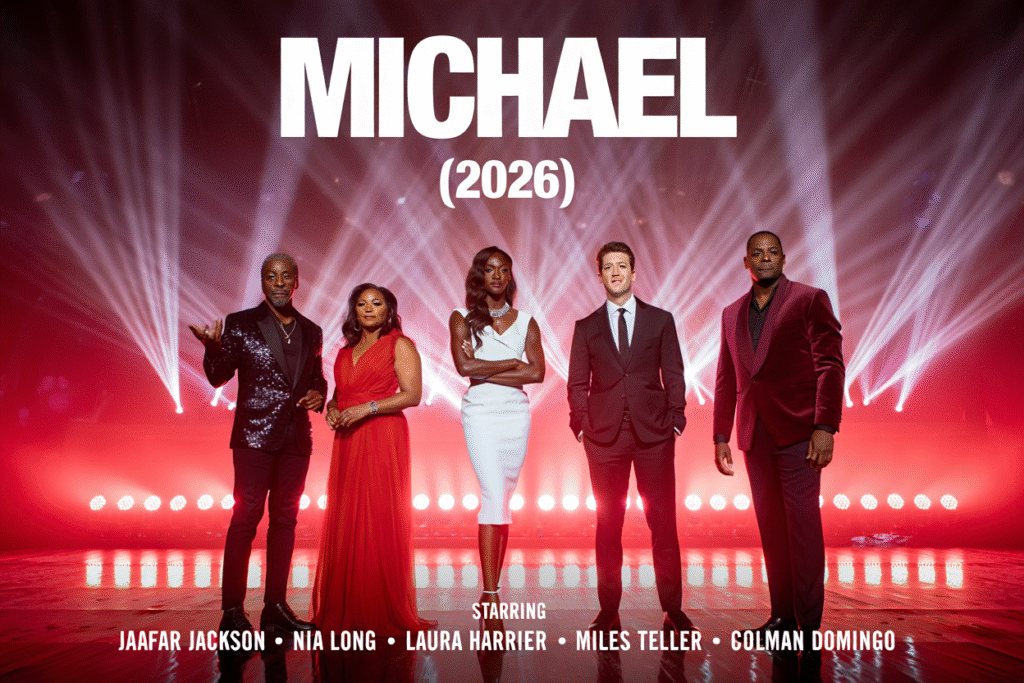
Visually, the film looks designed to overwhelm. Massive concert recreations, glittering stage lights, screaming crowds, and detailed recreations of iconic performances promise a level of spectacle rarely seen in modern music biopics. Director Antoine Fuqua reportedly used hundreds of extras for concert scenes, with some reacting so intensely to Jaafar’s performance that additional cameras were brought in to capture the energy.
Yet the biggest conversation surrounding Michael may not be what it includes — but what it leaves out. Reports suggest the film ends in 1984 and avoids directly exploring the allegations and controversies that marked Jackson’s later years. That decision has already sparked debate, with some arguing the film is more interested in preserving the legend than confronting the full truth of the man.
That tension may ultimately define the movie. Is Michael a portrait of an artist, a celebration of a cultural icon, or an act of reputation management? The answer may depend on what viewers expect going in.
Still, even its critics seem to agree on one thing: the music will be impossible to resist. Songs from albums like Thriller and Bad remain part of the cultural bloodstream, and the film appears determined to recreate the feeling of watching Michael at his peak. Community reactions to the trailer have been intensely emotional, with many fans saying Jaafar’s resemblance is almost uncanny.
