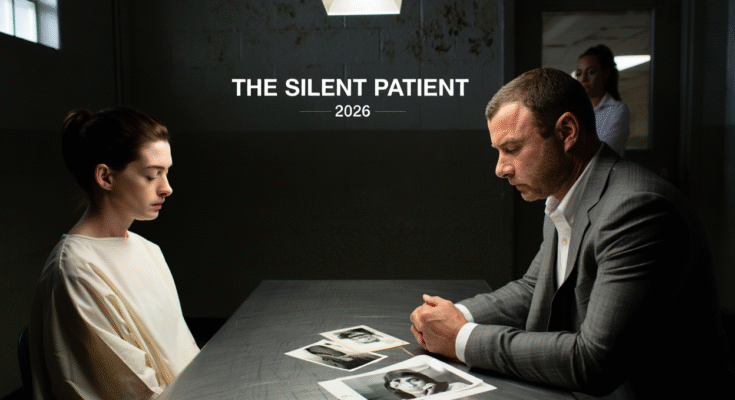
In the pantheon of psychological thrillers, few concepts are as inherently cinematic as the weaponization of silence. The Silent Patient (2026) arrives not just as an adaptation, but as a visceral exploration of the secrets that rot within the human soul when denied an outlet. The film establishes its chilling tone from the very first frame, painting a world where words are a luxury and quiet is a fortification. It is a mystery wrapped in a crime drama, yet it breathes with the atmospheric dread of a gothic horror, suggesting that the most dangerous monsters aren’t those who scream, but those who refuse to speak at all.
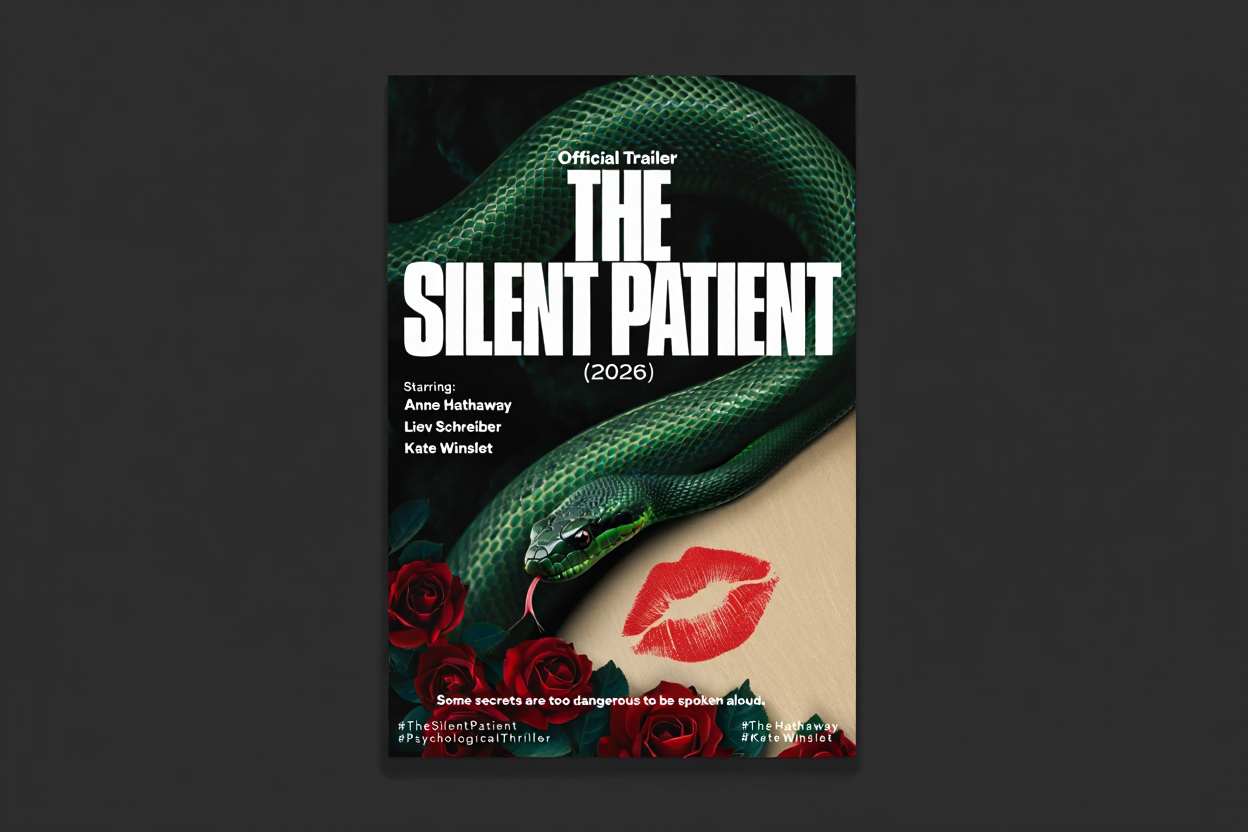
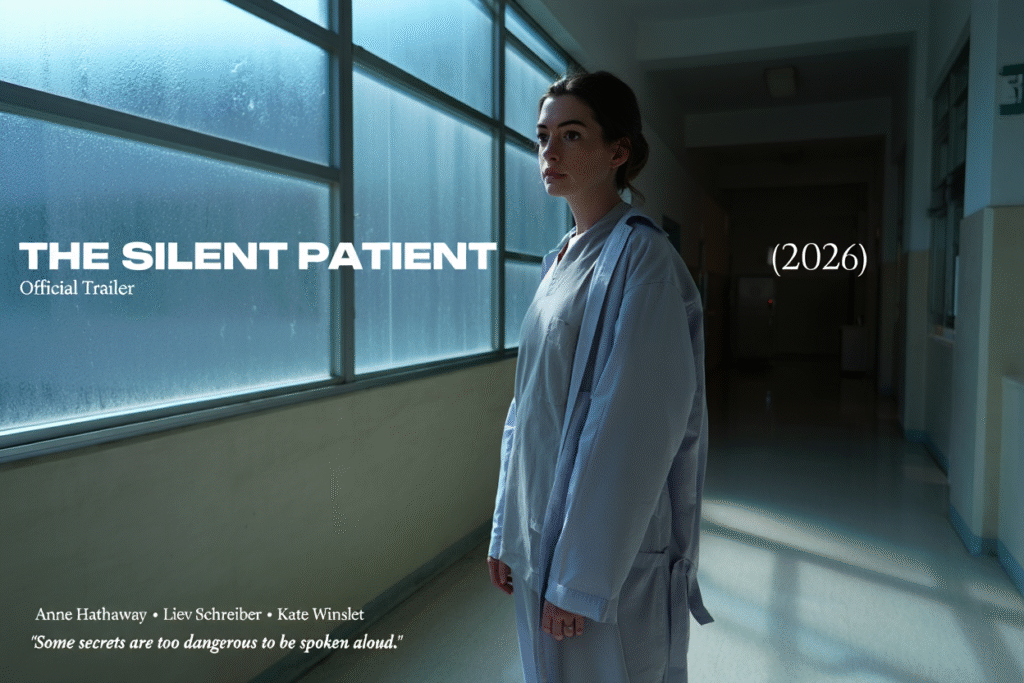
Anne Hathaway delivers what can only be described as a transformative performance, anchored entirely in the absence of dialogue. As the woman who committed the unthinkable and then retreated into a linguistic void, Hathaway must communicate a lifetime of trauma, defiance, and calculation through the mere tilt of her head or the cold flicker in her eyes. It is a daring feat of acting that strips away the crutch of speech, forcing the audience to lean in closer, searching her expression for a crack in the armor. She becomes a living Rorschach test—a haunting puzzle that reflects the fears and obsessions of everyone who dares to look at her.
Kate Winslet provides the perfect intellectual foil as the investigator tasked with navigating this fractured mental landscape. Winslet brings a weary, razor-sharp gravitas to the role, portraying a professional whose empathy is slowly eroded by the gravity of the case. Her performance is a masterclass in the “dangerous obsession,” showing us a woman who begins to lose the tether to her own life as she descends into the suspect’s psychological maze. The chemistry between Winslet and Hathaway is electric, a silent duel where every shared glance feels like a move in a high-stakes chess match played in a soundproof room.
Liev Schreiber rounds out the primary trio with a performance of brooding, understated intensity that adds a layer of structural stability to the film’s chaotic emotional core. Schreiber often excels in roles where he occupies the grey areas of morality, and here he serves as a grounded presence who may or may not be hiding his own shadows. His interactions with Winslet provide the necessary tension to keep the “crime” element of the story moving, ensuring that while the film explores deep psychological waters, it never loses the momentum of a pulse-pounding mystery.
The direction utilizes the “dark psychological maze” of the script to create a sense of perpetual disorientation, making the sterile clinical settings feel as claustrophobic as a tomb. The cinematography favors tight, intimate close-ups that emphasize the pores on a face or the dilation of a pupil, making the act of observation feel invasive and voyeuristic. This visual style mirrors the investigator’s journey; as she gets closer to the truth, the world around her becomes increasingly narrow and distorted. The hospital wings and interrogation rooms are transformed into a labyrinth where the exit is blocked by the very silence they are trying to break.
Thematically, the film grapples with the terrifying boundary between professional duty and personal disintegration. It asks a haunting question: can you truly understand a broken mind without breaking your own in the process? As the boundary between doctor and patient, investigator and suspect, begins to crumble, the film enters a fever-dream territory where motives are obscured and reality becomes subjective. This is “elevated” mystery at its best, using a shocking act of violence as a springboard to discuss the fragile architecture of the human ego and the lies we tell ourselves to stay sane.
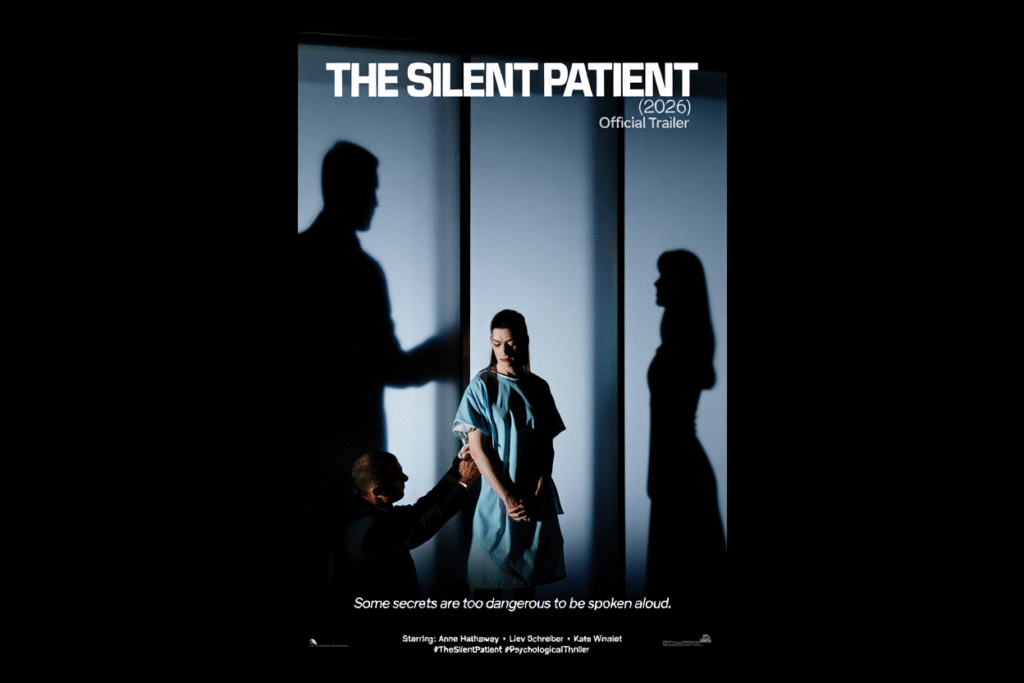
The script treats silence not as a void, but as a “calculated move,” a tactical choice that gives the silent patient more power than those who have the freedom of speech. This subversion of power dynamics is central to the film’s tension, as we realize that the investigator’s need for answers is a vulnerability that can be exploited. Every minute of screen time spent in quiet is a minute where the mystery grows more lethal, forcing the characters to confront the possibility that the truth might be more destructive than the lie. It is a narrative of slow-motion collision, where the collision is one of wills rather than bodies.
Musically, the score acts as the film’s internal monologue, filling the gaps left by the characters with dissonant strings and a low, rhythmic thrum that mimics a racing heart. It is an atmospheric triumph that enhances the “tense and captivating” nature of the battle of minds, never overwhelming the performances but providing a sonic texture to the isolation. The sound design is equally meticulous, highlighting the scratching of a pen or the hum of an air conditioner to emphasize just how loud the silence truly is. These technical elements work in harmony to ensure the audience is never allowed to feel comfortable or safe.
As the investigator delves deeper into the history of the crime, the film masterfully weaves together past and present, revealing that the “most terrifying secrets are never spoken… but deliberately kept hidden.” These flashbacks are handled with a lyrical, almost tragic beauty that contrasts sharply with the cold reality of the present-day investigation. We begin to see the “why” behind the silence, a revelation that is far more unsettling than the “how” of the violence itself. It turns the movie from a standard whodunit into a profound meditation on the enduring power of trauma and the weight of unspoken words.
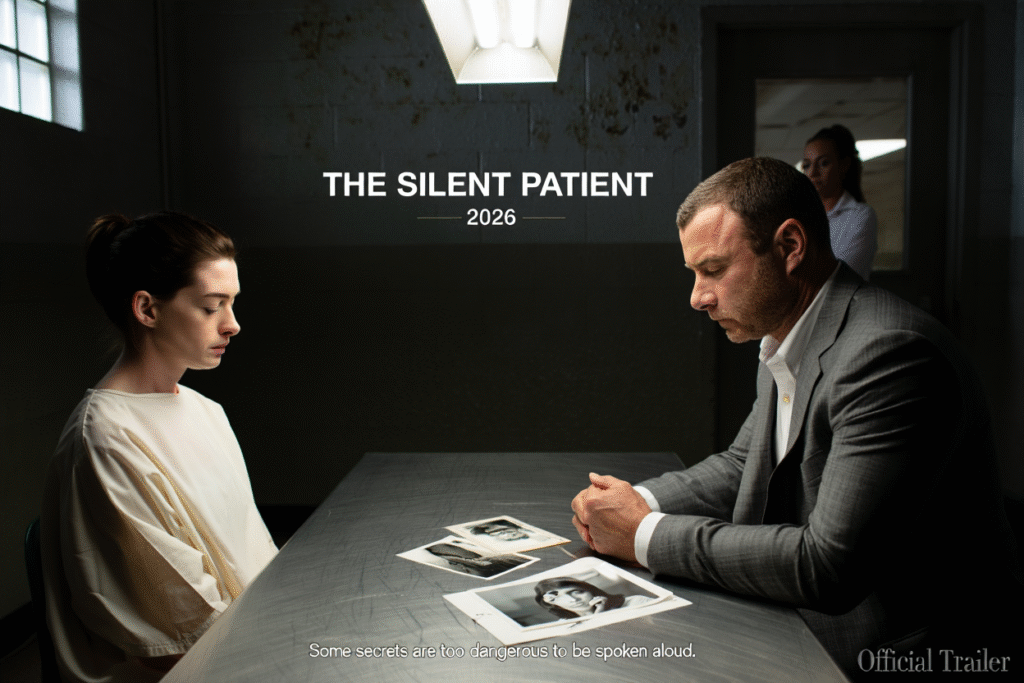
The climax of The Silent Patient is a tour de force of narrative precision, delivering a payoff that feels both inevitable and completely shocking. It is a moment where the “fragile boundary” finally snaps, leaving both the characters and the audience breathless in the wake of the truth. The film refuses to offer easy closure, opting instead for a haunting finality that suggests some mysteries are never truly solved—they are simply survived. It is a bold, uncompromising ending that respects the complexity of the characters and the darkness of the themes it has spent two hours exploring.
Ultimately, The Silent Patient is a landmark of the mystery-drama genre, a film that understands that the loudest scream is often the one that never leaves the throat. With powerhouse performances from Hathaway, Winslet, and Schreiber, it stands as a testament to the power of high-concept storytelling and the enduring fascination with the human psyche. We leave the theater feeling as though we have just emerged from that same dark maze, our ears ringing with the echo of a silence that refuses to be forgotten. It is a chilling, beautiful, and deeply moving experience that proves that the truth, no matter how quiet, will always find its way out.
