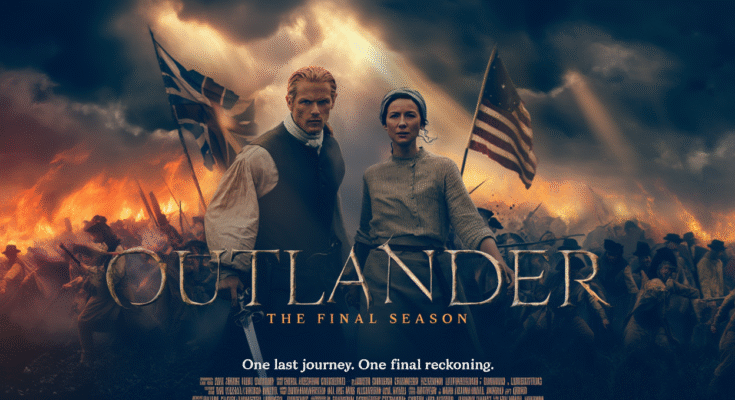
When time asks for everything, love decides what remains.
Outlander — Season 8 arrives not as a victory lap, but as a reckoning. This final chapter understands something essential about the series it concludes: that time was never just a mechanism for travel, but a force of erosion. Here, history is no longer a backdrop. It is a weight pressing down on every promise the Frasers have made to each other.
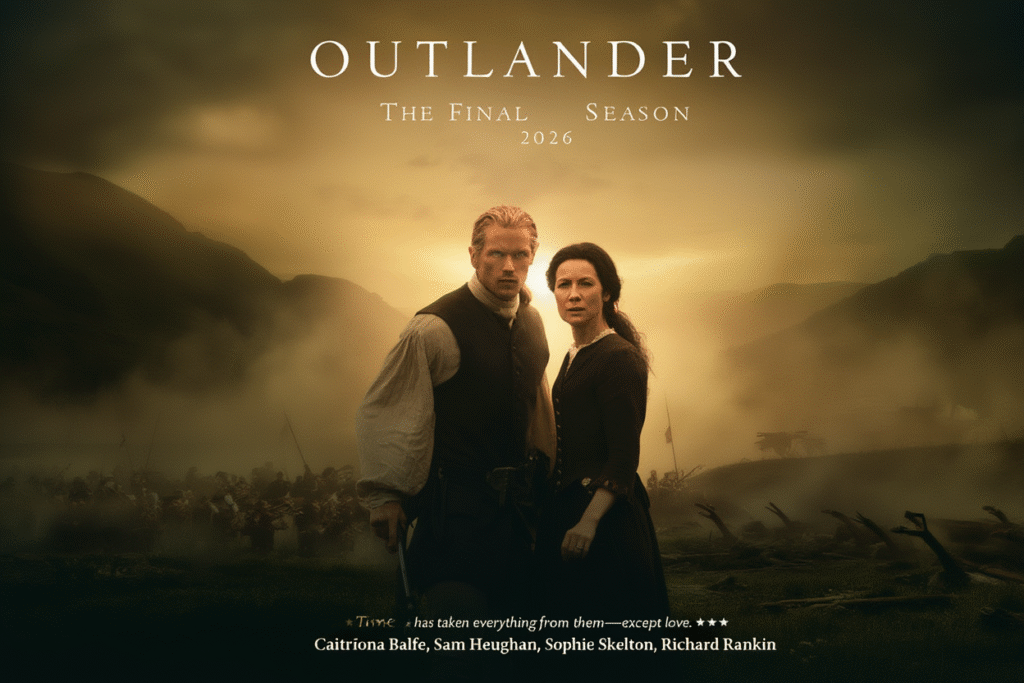
From its opening moments, the season feels heavy with inevitability. War looms not as spectacle, but as consequence. Revolutions do not ask permission, and Season 8 makes it painfully clear that survival is no longer guaranteed by courage or conviction alone. The world is changing faster than love can protect.
Jamie and Claire remain the emotional core, portrayed with extraordinary restraint by Sam Heughan and Caitríona Balfe. Their love has matured into something quieter and more fragile — not weaker, but aware of its limits. They are no longer fighting time. They are negotiating with it, knowing every compromise costs something irreplaceable.
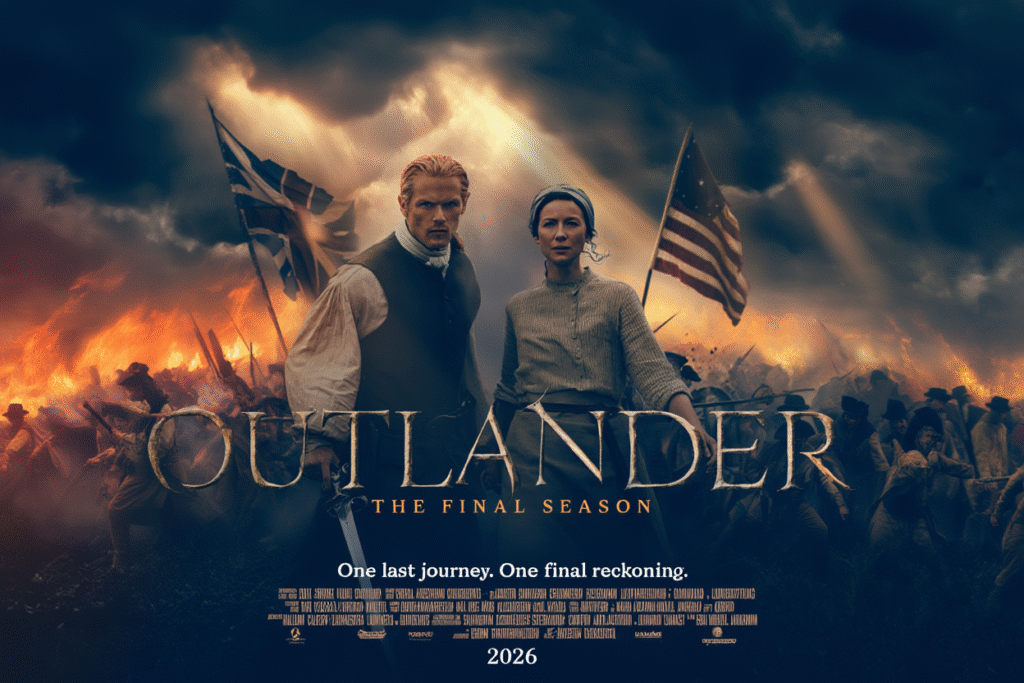
Claire’s journey this season is deeply internal. Medicine, once her shield against chaos, cannot heal everything history wounds. Balfe plays her with a calm resolve that barely conceals fear, grief, and the exhaustion of a woman who has lived too many lives and buried too many versions of herself.
Jamie, meanwhile, faces the slow unmaking of the world he understands. Honor, land, and loyalty collide in ways that leave no clean choices. Heughan gives his most subdued performance yet, embodying a man who knows that leadership often means choosing which loss you can survive.
Brianna and Roger’s storyline expands the season’s thematic reach. Their struggle is not just about time travel, but inheritance — what it means to live with the knowledge of the past without being consumed by it. Their choices mirror Jamie and Claire’s in quieter, more uncertain ways, reinforcing the idea that legacy is as much burden as gift.
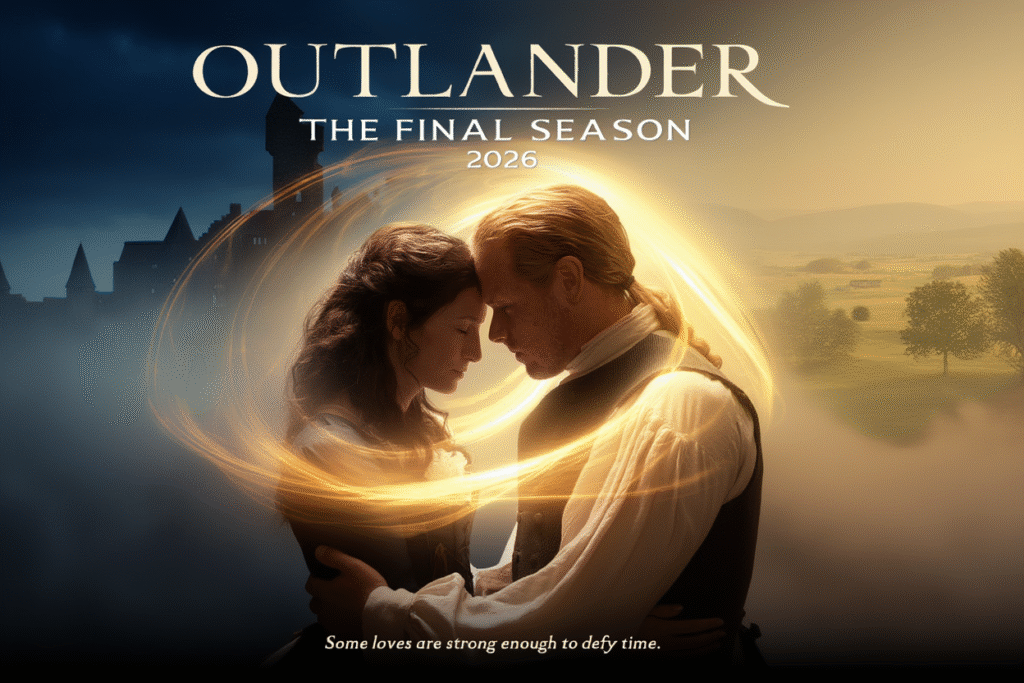
Season 8 excels in its pacing, allowing moments to breathe instead of rushing toward resolution. Silence becomes as important as dialogue. A look, a pause, a farewell held a second too long — these are the true climaxes of the season.
Visually, the series remains stunning, but never indulgent. Landscapes feel colder, darker, less forgiving. Nature no longer offers escape; it reflects the harsh reality that time moves forward without mercy.
What truly distinguishes this final season is its refusal to romanticize endurance. Love is not portrayed as invincible. It is portrayed as chosen — again and again — even when it hurts, even when it demands sacrifice without reward.
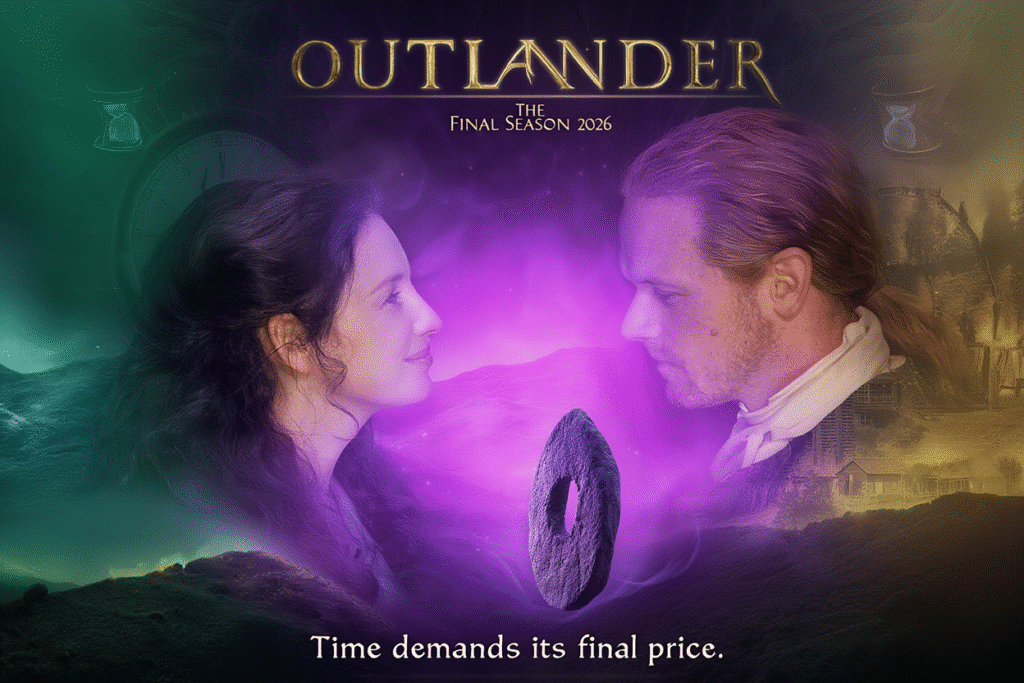
There is a quiet honesty in how Outlander approaches its ending. It understands that closure is not about answers, but acceptance. Some wounds remain open. Some separations never feel fair. And that, the series suggests, is what makes love meaningful.
Outlander — Season 8 is not just the end of a story. It is a meditation on what survives when history takes everything else.
🌿 Epic yet intimate. Tender yet unforgiving.
⏳ Because the greatest battle was never against time — it was learning how to live with it.
