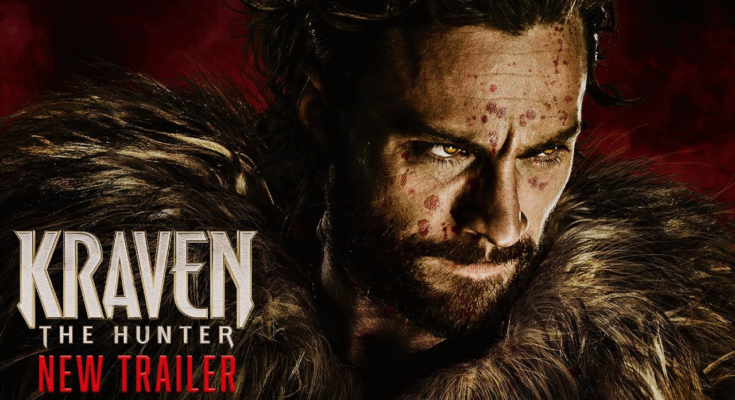
Kraven: The Hunter (2024) stalks its prey with primal intensity, a ferocious and surprisingly emotional entry in Sony’s expanding Spider-Man universe. Directed by J.C. Chandor, the film trades skyscrapers for wilderness, webs for claws, and transforms its antihero into a mythic predator torn between vengeance and instinct. It’s a story less about power than about purpose — a violent hymn to nature, legacy, and the monster within.
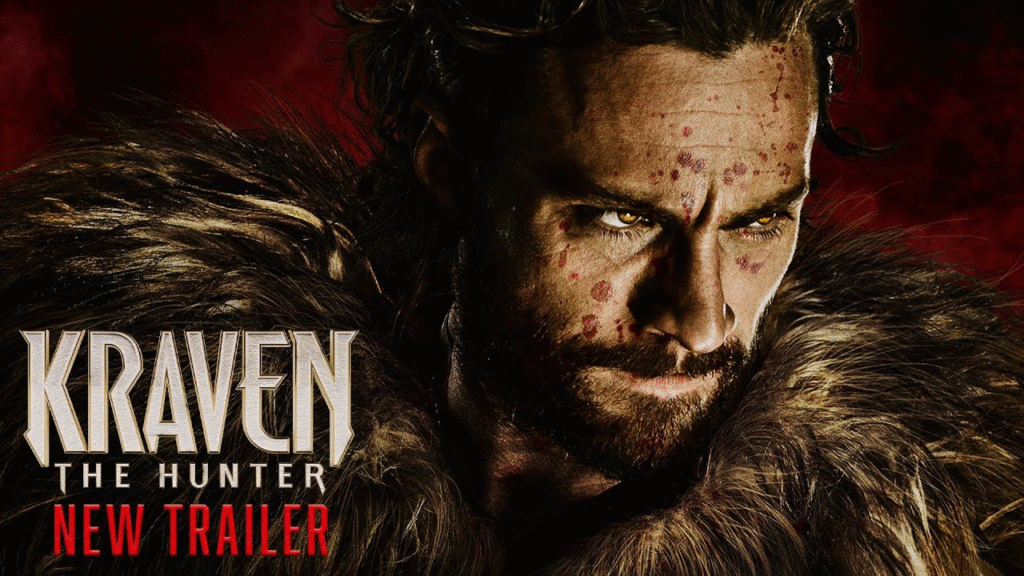
The film follows Sergei Kravinoff (Aaron Taylor-Johnson), the son of a Russian warlord who was left for dead in the African wild. Raised by brutality and reborn through survival, Sergei returns years later — a man molded by nature, hunting the most dangerous prey of all: his father, Nikolai Kravinoff (Russell Crowe), whose empire thrives on poaching, trafficking, and cruelty. What begins as revenge becomes revelation when Sergei realizes that his connection to the wild runs deeper — his blood altered by the beast that once spared him.
Aaron Taylor-Johnson delivers a magnetic performance — part warrior, part ghost. His Kraven moves with animal grace but carries the grief of a man who’s lost his place in both worlds. Every fight, every glare, pulses with unspoken rage. Taylor-Johnson captures both sides of the hunter — the philosopher who reveres life and the savage who must destroy it.
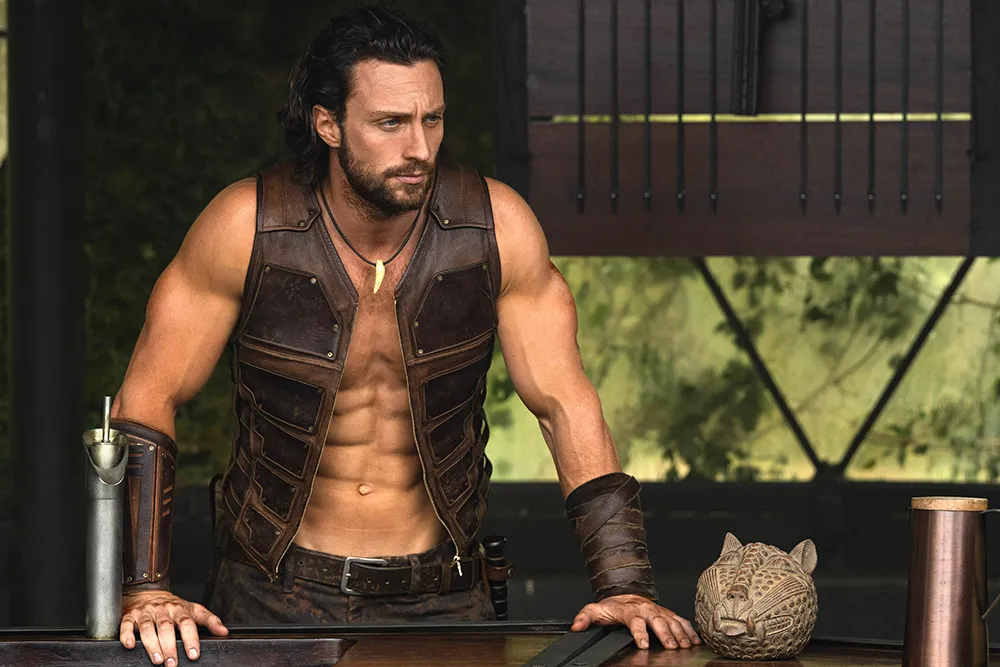
Russell Crowe commands the screen as Nikolai, a patriarch whose cruelty is coated in charisma. His scenes with Taylor-Johnson crackle with psychological tension — father and son bound by violence, divided by vision. Ariana DeBose shines as Calypso, a mystic healer whose power is both blessing and curse. Her relationship with Kraven — spiritual, sensual, and volatile — gives the story its heart, grounding the myth in raw emotion.
J.C. Chandor’s direction blends grit and grandeur. He shoots the film like a fever dream of sweat and blood — lush jungles drenched in shadow, rain-soaked streets pulsing with danger. Every set piece feels personal, intimate, brutal. The camera doesn’t just follow the chase; it breathes with it. When Kraven moves, the frame moves. When he stops, the silence feels alive.
The cinematography by Seamus McGarvey is stunning. Nature is both god and executioner — golden savannas burning at dawn, wolves circling under blood-red moons. In one unforgettable sequence, Kraven hunts a lion not to kill it, but to prove himself worthy of its mercy. The scene is wordless, operatic, and emblematic of the film’s core: dominance giving way to reverence.
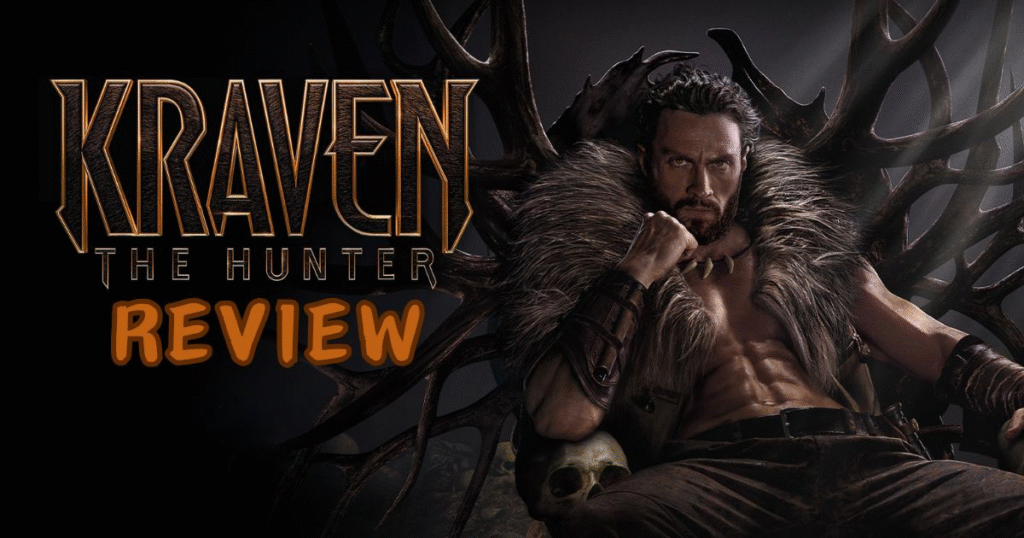
The score by Benjamin Wallfisch fuses primal percussion with orchestral menace, creating music that feels carved from bone. The main theme — deep drums layered beneath chanting strings — mirrors Kraven’s internal war: man versus animal, revenge versus redemption. Every cue builds like a heartbeat racing toward eruption.
Thematically, Kraven: The Hunter examines nature as morality. In the jungle, there are no good men — only balance. Kraven’s evolution from vengeance to understanding mirrors the world’s decay around him. “A hunter who kills without reason,” he says, “forgets why he lives.” The line lingers as the film’s thesis — a warning disguised as confession.
The action is visceral and grounded. Fights unfold with brutal realism — blades, claws, and muscle clashing in confined spaces. Blood is not stylized; it’s consequence. Chandor avoids CGI excess, letting pain speak louder than spectacle. Each blow lands with the weight of survival, every victory feeling pyrrhic.
The climax delivers both grandeur and grief. Kraven finally confronts his father in the ruins of an ivory fortress, their duel filmed like ritual — predator versus progenitor, nature versus empire. When the final strike comes, it’s not triumph but release. Kraven walks away wounded but reborn, his father’s empire collapsing into silence.
The closing scene is quiet: Kraven kneeling beneath a rising sun, surrounded by the wolves that once hunted him. He places his weapons on the ground and whispers, “The world doesn’t need another killer. It needs a keeper.” As the wind howls through the trees, his silhouette fades into the wild — neither man nor beast, but something between.
Kraven: The Hunter (2024) is a brutal, beautiful tragedy — a film about bloodlines, redemption, and the animal that lives inside us all. Aaron Taylor-Johnson cements himself as one of the genre’s most commanding presences, and Chandor delivers a story that cuts deeper than expected.
In the end, it’s not the hunt that defines Kraven.
It’s what he chooses to let live. 🐾
