A Bold, Romantic Stand Against the Rules of the Ton
With its fifth season, Bridgerton pivots toward one of its most intellectually restless and emotionally complex characters: Eloise Bridgerton. Subtitled The Rebel’s Heart, the 2026 chapter reframes the glittering world of Regency London through a sharper, more politically charged lens. This is not merely another slow-burn courtship wrapped in orchestral pop covers and candlelit ballrooms. Instead, it is a season that dares to question the very structure that has long sustained the show’s romantic fantasy.
At the center stands Claudia Jessie, whose portrayal of Eloise has always simmered with impatience toward societal expectation. Here, that defiance becomes the narrative engine. Jessie elevates Eloise beyond witty side commentary and into fully realized emotional territory. Her rejection of a strategic marriage proposal—one designed to secure her family’s influence—does not play as impulsive rebellion. It feels inevitable. Eloise has spent seasons critiquing the system; now she must confront it directly.

Her romantic counterpart, portrayed by Chris Fulton, embodies a progressive worldview that stands in direct contrast to the rigid hierarchies of the Ton. Their chemistry is built not on flirtation alone but on intellectual connection—shared ideals, mutual curiosity, and the intoxicating thrill of being understood. This dynamic gives the romance a different texture than past seasons. It is less about longing glances across ballrooms and more about whispered debates in quiet corners. The tension is ideological as much as romantic.
What makes The Rebel’s Heart especially compelling is the scale of consequence. Eloise’s defiance does not unfold in a vacuum. Invitations are rescinded. Social alliances fracture. The family name—once synonymous with prestige—begins to wobble under scrutiny. The writing smartly emphasizes how individual choice in this world is never purely individual. Every decision carries weight for siblings, friends, and future prospects.
Nicola Coughlan’s Penelope Featherington plays a particularly nuanced role this season. Having navigated her own transformation in previous arcs, Penelope now finds herself suspended between loyalty to Eloise and the instinct for self-preservation. Coughlan delivers a layered performance that captures both affection and fear. Penelope understands the cost of scandal perhaps better than anyone. Her internal conflict adds emotional gravity to scenes that might otherwise feel like standard social maneuvering.
Luke Thompson’s Benedict also benefits from the season’s thematic focus on individuality. His artistic ambitions, long portrayed as charming eccentricity, are reframed here as a parallel struggle. Through Benedict, the show examines creative freedom as another form of rebellion. Is artistic authenticity worth the alienation it can bring? His storyline mirrors Eloise’s in subtle but resonant ways, reinforcing the season’s core question: what is the price of self-definition?
Visually, the season maintains the lush aesthetic that has defined the series—ornate costumes, candlelit interiors, sweeping orchestral arrangements—but there is a tonal shift. The color palette leans slightly cooler, the lighting more restrained. Ballrooms feel less like dreamscapes and more like arenas of scrutiny. Even moments of beauty carry an undercurrent of tension, as though society itself is watching.
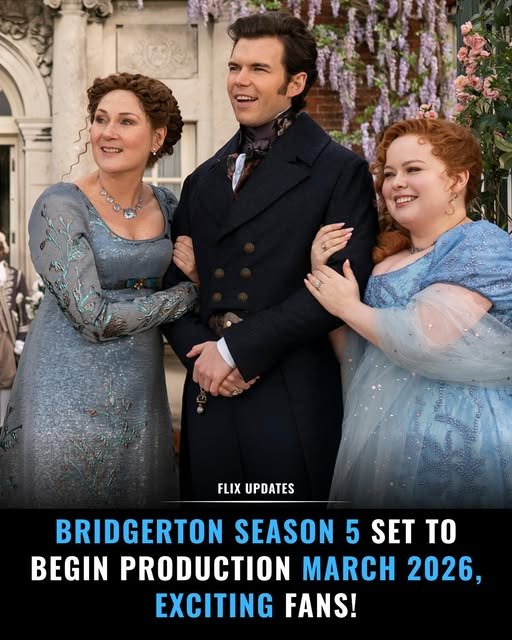
Thematically, The Rebel’s Heart explores autonomy within constraint. Eloise’s rebellion is not framed as a rejection of love or family, but as an insistence that love and family should not require erasure of self. The season questions whether tradition can evolve—or whether it survives precisely because it resists change.
Importantly, the narrative does not romanticize rebellion as effortless. Eloise’s path is isolating. Friendships strain. Family conversations grow heavier. Claudia Jessie handles these quieter confrontations with remarkable subtlety. A glance across a dinner table often communicates more than a declaration ever could. Her performance ensures that Eloise’s struggle feels deeply personal rather than abstractly political.
Pacing remains steady, allowing emotional beats to unfold without sacrificing dramatic momentum. The season balances intimate dialogue-driven scenes with public spectacles of tension—royal gatherings, whispered scandals, and the looming threat of royal disfavor. The Queen’s shifting attitude becomes a silent barometer for societal approval, reinforcing how fragile status truly is.
What ultimately distinguishes Season 5 is its maturity. While previous installments leaned more heavily into fairy-tale escapism, The Rebel’s Heart acknowledges that love within rigid systems demands sacrifice. It does not offer a simplistic victory over tradition. Instead, it presents change as gradual, hard-won, and imperfect.
The season’s final episodes build toward a resolution that feels emotionally earned rather than theatrically explosive. Choices are made not in grand public gestures, but in deeply human moments of conviction. The message resonates clearly: choosing one’s destiny is not always glamorous—but it is transformative.
In focusing on Eloise, Bridgerton refreshes its formula without abandoning its identity. The romance remains swoon-worthy, the costumes remain exquisite, and the orchestral covers still shimmer. Yet beneath the elegance lies something more daring: a critique of expectation wrapped inside a love story.

Rating: 9/10
With The Rebel’s Heart, Bridgerton proves it can evolve alongside its characters—trading comfort for courage, and spectacle for substance—while reminding viewers that in high society, the boldest rebellion of all may be choosing to live authentically.
Watch movie:

*Content is hosted on a partner site.
