
🎬 Why Can I Love But Not Marry You (2026) – A Heartfelt Journey Through Love and Commitment
In the world of modern romance, where love is often tested by the weight of expectations and the complexities of the heart, Why Can I Love But Not Marry You (2026) stands out as a poignant exploration of the delicate balance between passion and practicality. With standout performances from Song Joong-ki, Park Shin-hye, Lee Seung-gi, and Kim Ji-won, this Korean drama takes viewers on an emotional rollercoaster, questioning whether true love can exist without the formalities of marriage, or if commitment is the ultimate test of a relationship.
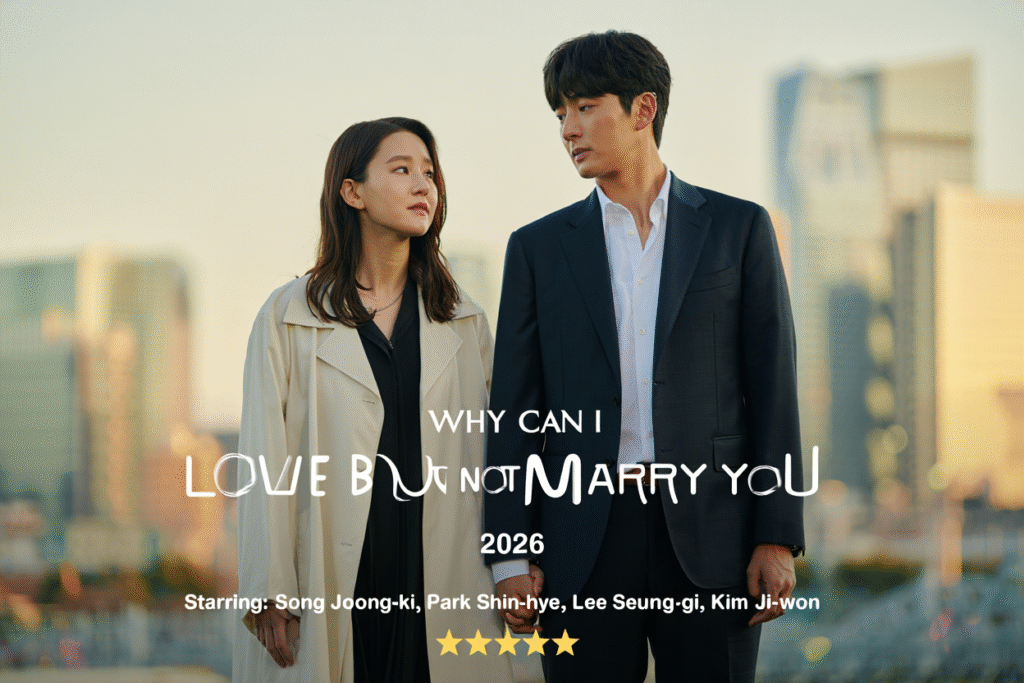
At the center of the film is Song Joong-ki, playing Joo Hyun, a successful man who seems to have it all—but harbors deep emotional scars. Joo Hyun’s long-term relationship with Na Eun (played by the ever-charming Park Shin-hye) is filled with undeniable chemistry, but his past heartbreaks have made him emotionally guarded. Despite being deeply in love with Na Eun, Joo Hyun finds himself unable to take the next step. His fear of repeating past mistakes creates a wall between his heart and his desires, forcing him to ask the haunting question: Can love truly survive without commitment?
On the other side of the coin is Na Eun, portrayed by Park Shin-hye, a woman who is independent, driven, and who has patiently waited for Joo Hyun to commit to their future. Na Eun’s internal struggle mirrors Joo Hyun’s, but it comes from a different place: her growing doubt about what love and marriage truly mean. As the years pass, she begins to wonder if the promises of love are enough to sustain her dreams, and whether she is willing to sacrifice her own sense of freedom for the sake of love. Her journey is one of self-discovery, as she grapples with the question of whether to continue waiting for a commitment that may never come.

The film masterfully explores the tension between the desires of the heart and the pressures of societal expectations. Love, as portrayed in this drama, is not a simple emotion—it is a complex, multifaceted force that is shaped by history, fear, and the constant balancing act between individual freedom and shared responsibility. This dynamic plays out beautifully in the chemistry between Joo Hyun and Na Eun, whose relationship evolves from passion to emotional conflict, forcing both characters to confront their own fears, desires, and insecurities.
Adding depth and richness to the narrative are Lee Seung-gi and Kim Ji-won, who play characters caught in their own romantic dilemmas. Their performances bring warmth and complexity to the story, offering a contrast to the primary couple’s emotional struggles. As friends who are navigating their own relationships, their characters provide both support and reflection for Joo Hyun and Na Eun, highlighting the different ways people approach love, commitment, and personal growth. Their storylines complement the central plot, adding layers of emotional depth and providing a broader view of the relationships that shape our lives.
Why Can I Love But Not Marry You is a deeply emotional film that doesn’t shy away from the messy, painful aspects of love. It asks the tough questions: Can true love exist without the binding promise of marriage? Is commitment a necessary part of a lasting relationship, or can love survive on its own terms? The film’s exploration of these themes resonates deeply, offering a thought-provoking commentary on the nature of modern relationships.

The cinematography of the film captures the emotional weight of the story perfectly, with soft lighting and intimate framing that allow the audience to feel the characters’ emotional turmoil. The quiet moments of reflection between Joo Hyun and Na Eun are beautifully shot, allowing their internal struggles to unfold in subtle yet powerful ways. These visual cues, combined with a hauntingly beautiful soundtrack, create an atmosphere that immerses viewers in the emotional landscape of the film.
Ultimately, the film’s greatest strength lies in its portrayal of love as an evolving journey, not a fixed destination. Joo Hyun and Na Eun are forced to face the idea that love, like life, is rarely straightforward. As they navigate their emotional battles, the film suggests that there is no one-size-fits-all answer to love and commitment. Each relationship is unique, shaped by the people within it and the circumstances surrounding it.
The ending of Why Can I Love But Not Marry You leaves viewers with a bittersweet sense of hope and longing. The film doesn’t provide easy resolutions, but rather invites the audience to reflect on their own experiences with love and commitment. Is marriage the ultimate proof of love, or is love something that transcends the traditional expectations of society?

With powerful performances, a rich, emotional narrative, and a thought-provoking exploration of modern relationships, Why Can I Love But Not Marry You is a film that lingers in the heart long after the credits roll. It is a poignant reminder that love, in all its forms, is as complicated and beautiful as life itself.
⭐ Rating: ★★★★★ – A deeply emotional exploration of love, commitment, and the complexities of modern relationships.
#WhyCanILoveButNotMarryYou #SongJoongKi #ParkShinHye #LeeSeungGi #KimJiWon #KoreanDrama #Romance
Watch movie:

*Content is hosted on a partner site.