
Goodbye June (2026) is the kind of film that doesn’t rush to explain itself. It arrives quietly, like bad news delivered on a calm afternoon, and settles into your chest before you realize how deeply it has taken hold. This is not a story about loss alone, but about everything loss awakens—old resentments, unfinished conversations, and the fragile hope that reconciliation is still possible.

Set against a windswept rural landscape, the film opens with a family reunion born not of celebration, but necessity. June is gone—or going—and her absence becomes the gravitational force pulling everyone back to the place they once fled. The house feels heavy with memory, each room echoing with things never said.
Helen Mirren anchors the film with devastating restraint. Her performance is all quiet authority and accumulated sorrow, a woman who has learned how to survive pain by carrying it with dignity. Every pause in her dialogue feels intentional, as if silence itself has become her native language.
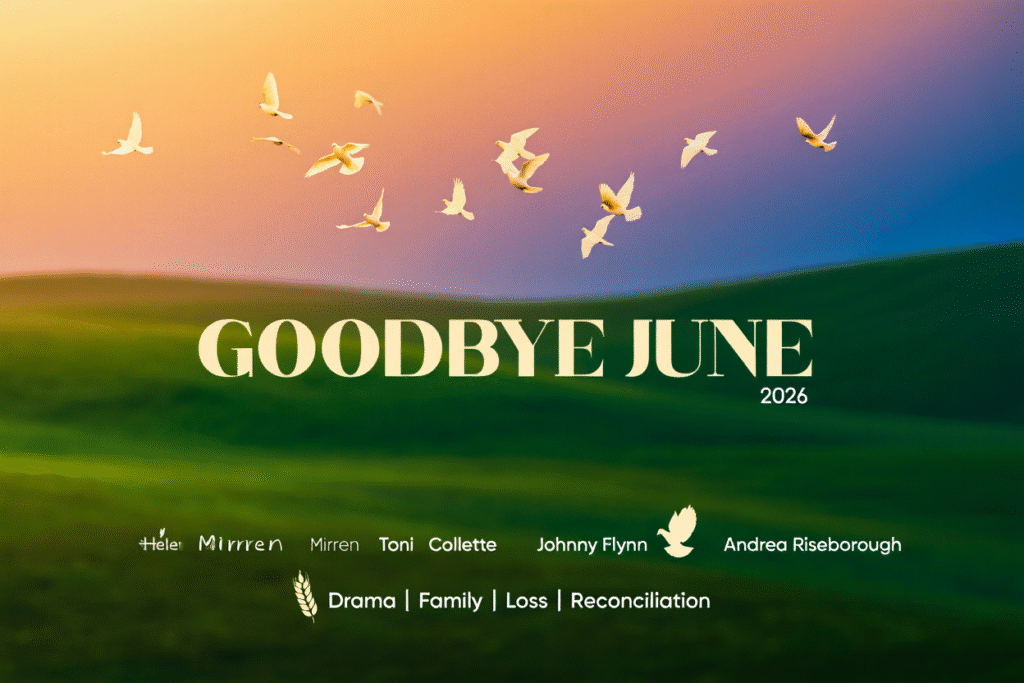
Toni Collette, as ever, brings emotional volatility that crackles beneath the surface. Her character is raw, bruised by years of unresolved anger and love tangled together. Collette doesn’t ask for sympathy—she demands understanding, and the film is stronger for it.
Johnny Flynn delivers a performance marked by gentleness and internal conflict. He plays a man stuck between who he was and who he was expected to become, haunted by absence and the quiet guilt of distance. His scenes feel lived-in, as though the character has been waiting years for this moment to finally confront himself.
Andrea Riseborough is perhaps the film’s sharpest edge. Her presence cuts through sentimentality with precision, portraying a character whose composure masks a deep emotional fracture. She embodies the kind of grief that turns inward, sharp and isolating, and her chemistry with Collette is electric in its tension.

What Goodbye June does exceptionally well is resist melodrama. There are no explosive confrontations designed for easy catharsis. Instead, emotions leak out in sideways glances, unfinished sentences, and small, devastating gestures. The film trusts the audience to listen closely.
The rural setting becomes a character of its own—fields that stretch endlessly, skies that feel too open, and silence that presses in rather than comforts. Nature offers no escape here; it simply bears witness, indifferent yet beautiful.
Themes of forgiveness and reconciliation are handled with honesty rather than optimism. Not every wound is healed. Not every apology is accepted. The film understands that closure is not a guarantee—it’s a possibility, fragile and rare.
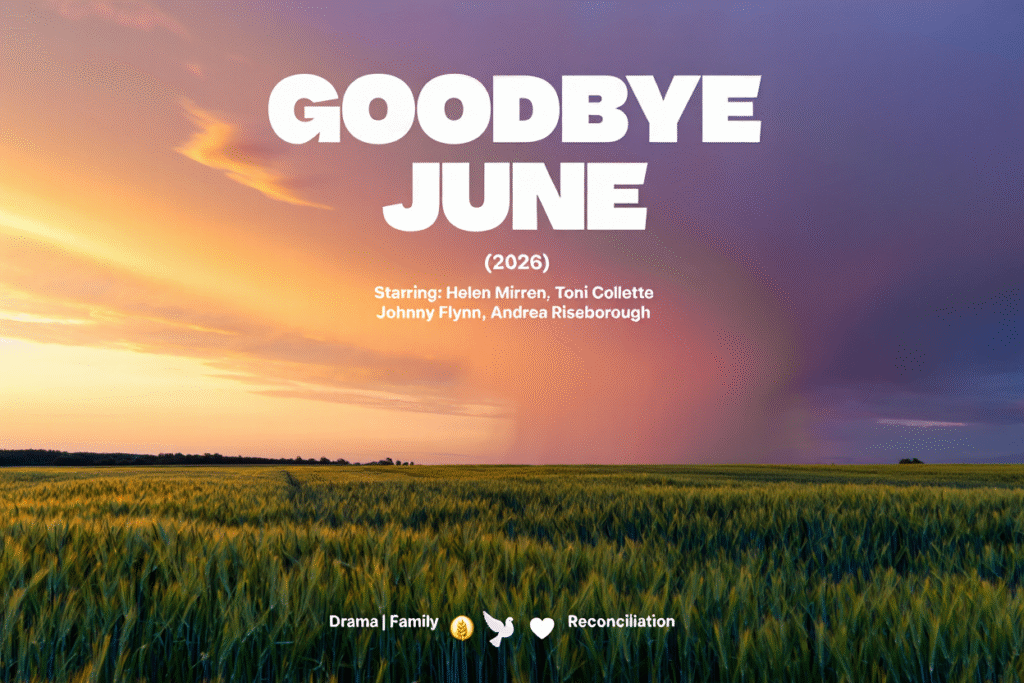
Music and sound design are used sparingly, allowing ambient noise and stillness to dominate. When the score does emerge, it feels earned, rising gently like memory rather than manipulation.
By its final moments, Goodbye June doesn’t tell you how to feel—it leaves you sitting with it. With grief. With love. With the uncomfortable truth that family can be both the source of our deepest pain and our only way home.
This is a film that lingers long after the credits roll. Goodbye June is not loud, not flashy, and not easy—but it is deeply human. A quiet reckoning with loss, and a tender reminder that sometimes reconciliation begins not with forgiveness, but with simply staying.
Watch movie:

*Content is hosted on a partner site.