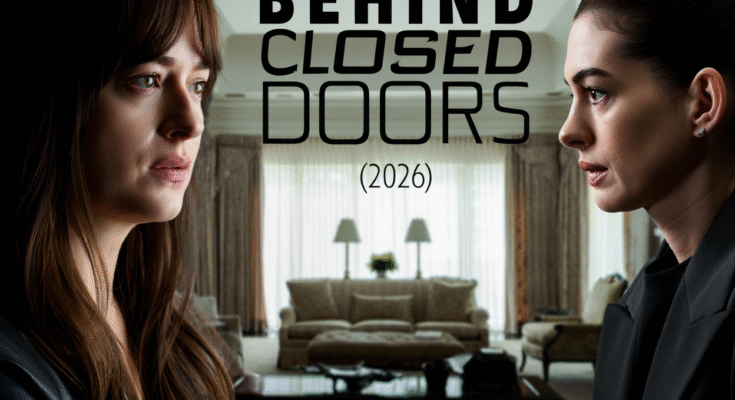
Behind Closed Doors (2026) is a slow-burning psychological thriller that thrives on unease rather than spectacle. From its opening moments, the film establishes a suffocating atmosphere where smiles linger too long, conversations feel rehearsed, and every closed door seems to hide a truth begging to be uncovered. It’s a story less about what happens, and more about what people choose not to say.
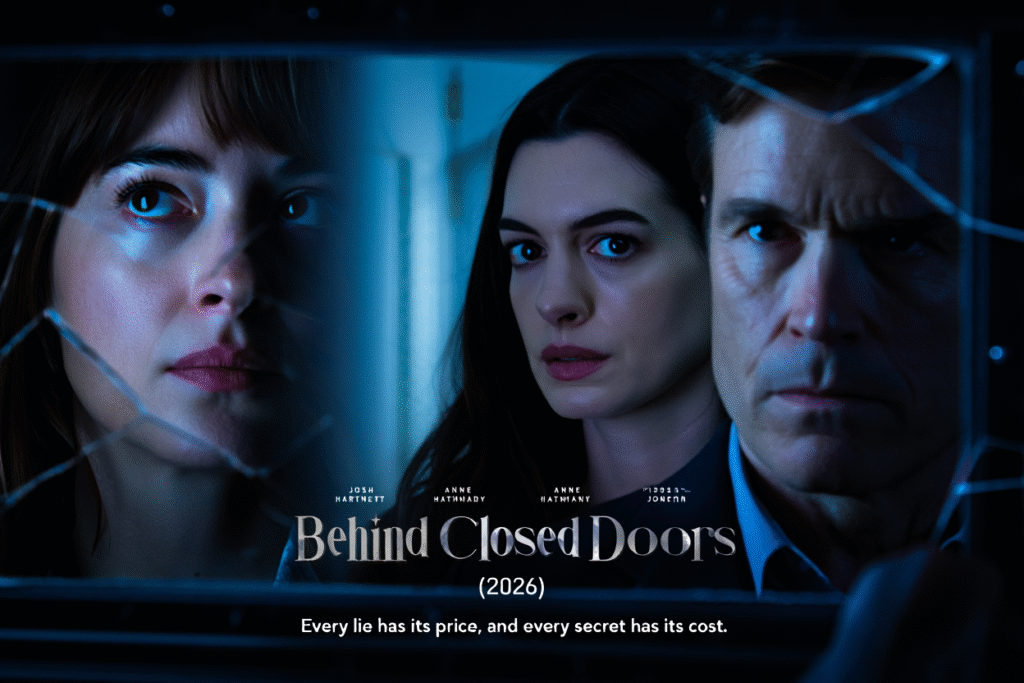
Dakota Johnson delivers one of her most restrained and quietly devastating performances as Claire. At first glance, Claire’s life appears meticulously curated—successful career, elegant home, and controlled composure. But Johnson allows cracks to form beneath the surface, revealing a woman haunted by choices she thought were buried. Her vulnerability never feels performative; it’s internal, simmering, and painfully real.
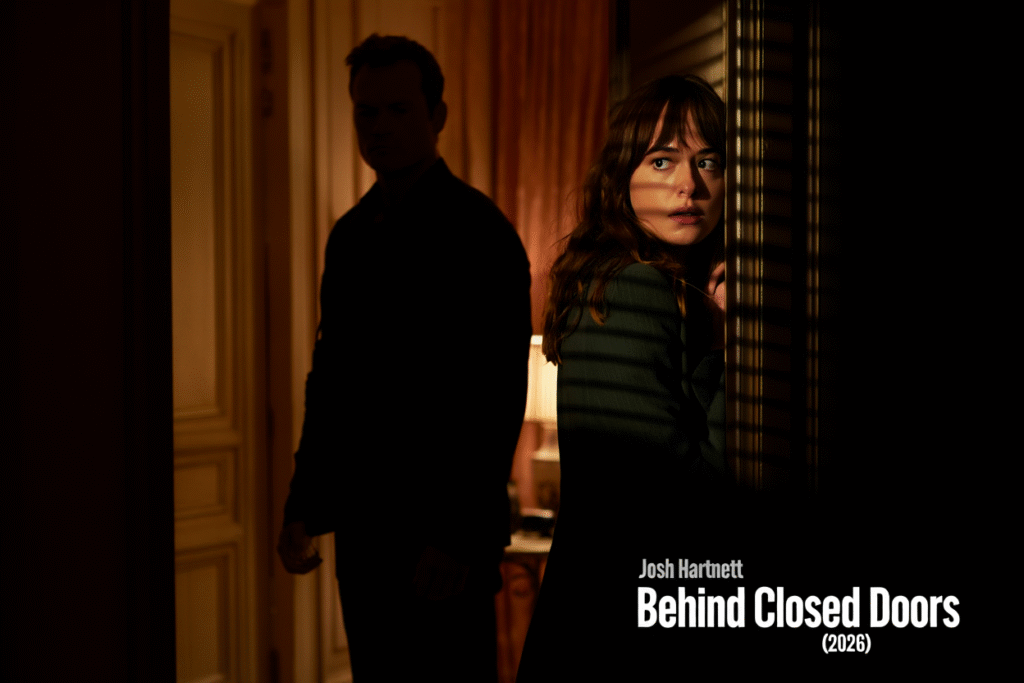
Josh Hartnett’s Alex is the film’s most unsettling presence. He doesn’t rely on overt menace—his danger lies in familiarity. Hartnett plays him with a calm that borders on hypnotic, making every smile feel calculated and every pause intentional. Alex is not a villain who storms in; he seeps into the narrative, slowly tightening his grip on Claire’s reality.
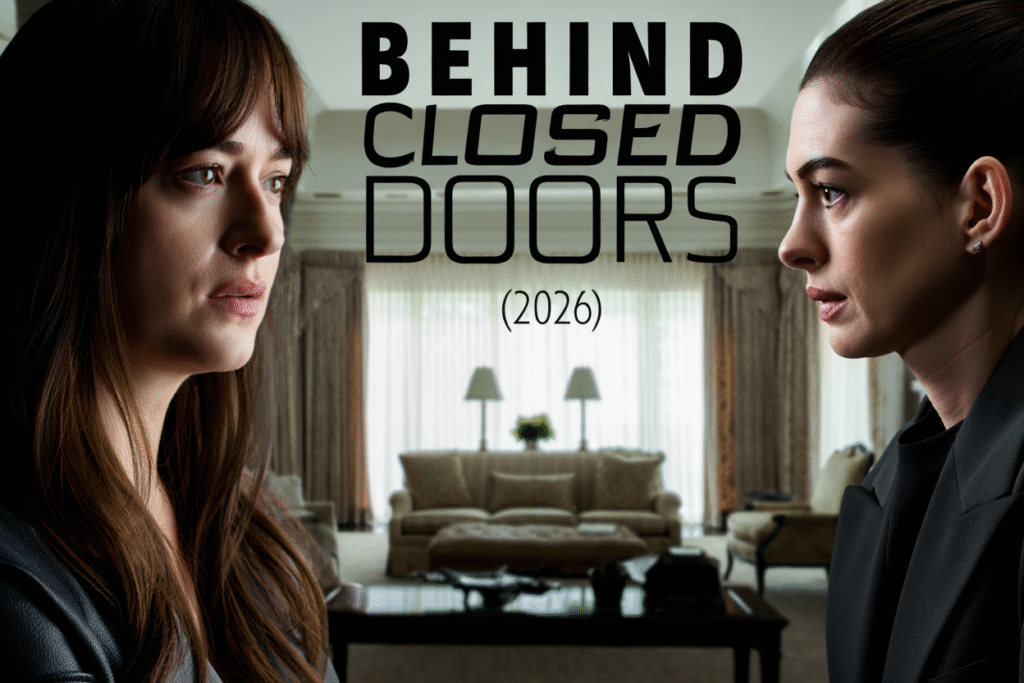
Anne Hathaway’s Olivia is perhaps the most complex character in the film. As Claire’s closest friend, she represents safety, loyalty, and stability—until she doesn’t. Hathaway masterfully navigates Olivia’s duality, shifting from warmth to quiet defensiveness in subtle ways. Her performance suggests that secrets don’t always come from malice; sometimes, they come from fear of losing everything.
The film’s greatest strength lies in its exploration of trust. Behind Closed Doors asks uncomfortable questions: How well do we truly know the people closest to us? How much of friendship is built on truth, and how much on convenient silence? As the connections between Claire, Alex, and Olivia tighten, the emotional stakes become more disturbing than the central mystery itself.
Directorally, the film leans heavily into mood. Muted color palettes, tight framing, and lingering close-ups amplify the psychological tension. Rooms feel smaller as the story progresses, mirroring the characters’ shrinking sense of control. Even moments of quiet feel loaded, as if the film is daring the audience to breathe too loudly.
The pacing is deliberate, sometimes uncomfortably so—but intentionally. This is not a thriller that rushes toward its twists. Instead, it lets dread accumulate slowly, allowing each revelation to feel earned. When the truths finally surface, they don’t explode—they cut, leaving emotional scars rather than shock alone.
What sets Behind Closed Doors apart from standard thrillers is its emotional weight. The film understands that the most terrifying consequences of lies are not death or destruction, but guilt, isolation, and the loss of self. Each character is forced to confront not only what they’ve hidden, but why they chose to hide it.
The screenplay avoids clear heroes and villains, which makes the story all the more unsettling. Everyone is complicit in some way. Every character has justified their silence, their deception, their denial—and the film refuses to offer easy forgiveness. Instead, it presents consequences that feel painfully human.
As the final act unfolds, the tension becomes almost unbearable—not because of action, but because of emotional inevitability. You sense that no outcome will be clean, no truth will come without collateral damage. The film’s climax is haunting precisely because it feels real, grounded, and irreversible.
Behind Closed Doors (2026) is a chilling reminder that the most dangerous prisons are the ones we build ourselves. With powerhouse performances, razor-sharp psychological insight, and an atmosphere thick with unease, the film lingers long after the screen fades to black. It doesn’t ask you to solve a mystery—it asks you to sit with it, and question how many doors in your own life are better left unopened.
Watch movie:

*Content is hosted on a partner site.