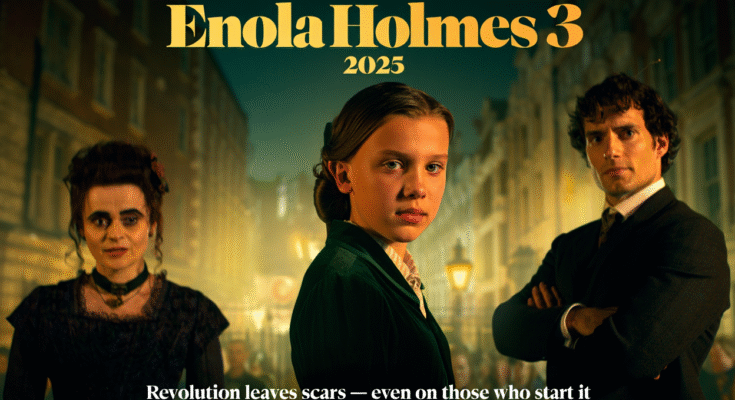
Enola Holmes 3 marks the boldest and most mature chapter in the franchise, shedding much of its playful mystery tone in favor of a darker, politically charged narrative that feels unsettlingly relevant. This is no longer just a clever detective story—it’s a meditation on power, sacrifice, and the uncomfortable truth that even righteous movements can rot from within.
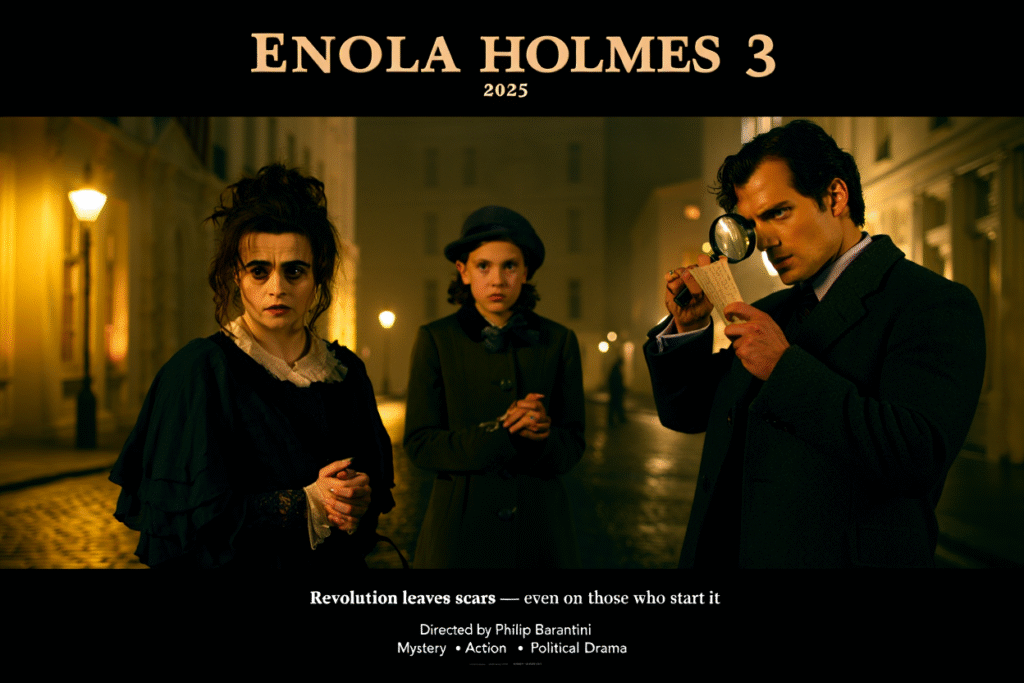
Millie Bobby Brown delivers her strongest performance as Enola to date, portraying a young woman no longer protected by optimism alone. Enola’s intelligence remains razor-sharp, but this time it’s weighed down by doubt. As the suffragette network collapses under betrayal, her confidence fractures, forcing her to question not only who she can trust—but why she fights at all.
Helena Bonham Carter’s Eudoria Holmes steps fully into the moral gray zone. Once a symbol of fearless resistance, she now embodies the cost of leadership under constant threat. Her storyline is tense and tragic, showing how revolutionaries can become prisoners of their own secrecy. The film dares to ask whether a cause is still just when it demands silence, blood, or erasure.
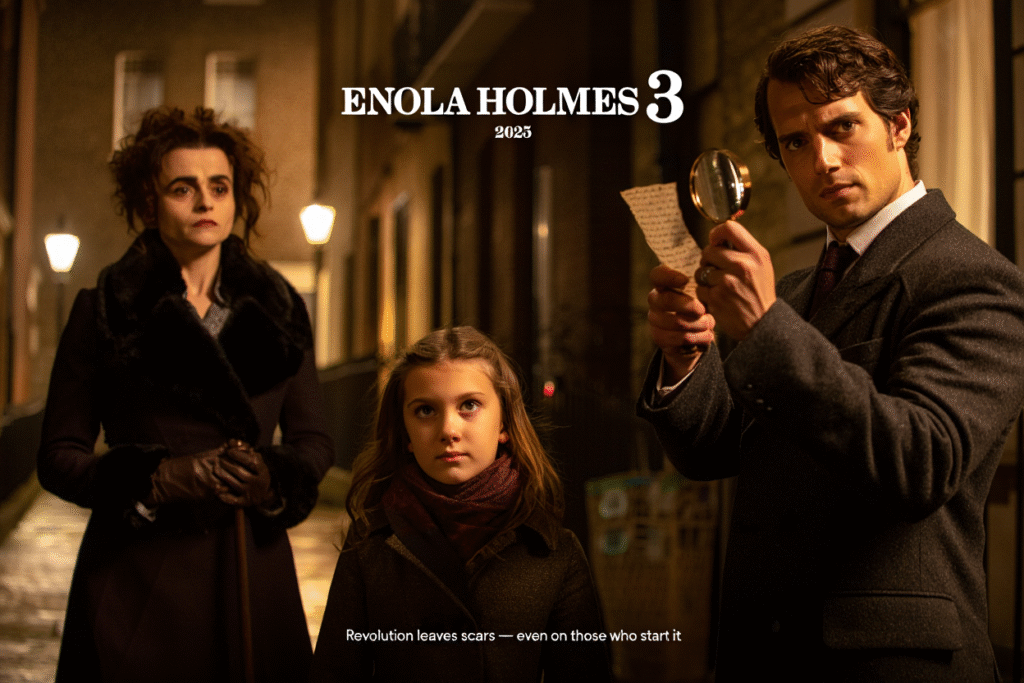
Henry Cavill’s Sherlock is colder, more distant, and more unsettling than ever. His methodical pursuit of truth strips emotion from morality, leading him to a conclusion that feels logical—but devastating. The contrast between Enola’s empathy and Sherlock’s detachment becomes the film’s emotional fault line, turning their sibling bond into a philosophical conflict rather than a familial one.
Director Philip Barantini brings a grounded intensity to the film, using shadow-heavy cinematography, long tension-filled sequences, and minimal exposition. Messages are hidden in glances, silences, and unfinished sentences. The world feels constantly watched, reinforcing the idea that power doesn’t always announce itself—it observes and waits.
What truly elevates Enola Holmes 3 is its refusal to provide easy answers. Betrayal isn’t villainized—it’s contextualized. Justice isn’t victorious—it’s compromised. The film understands that political change is rarely clean, and that progress often leaves casualties history prefers to forget.
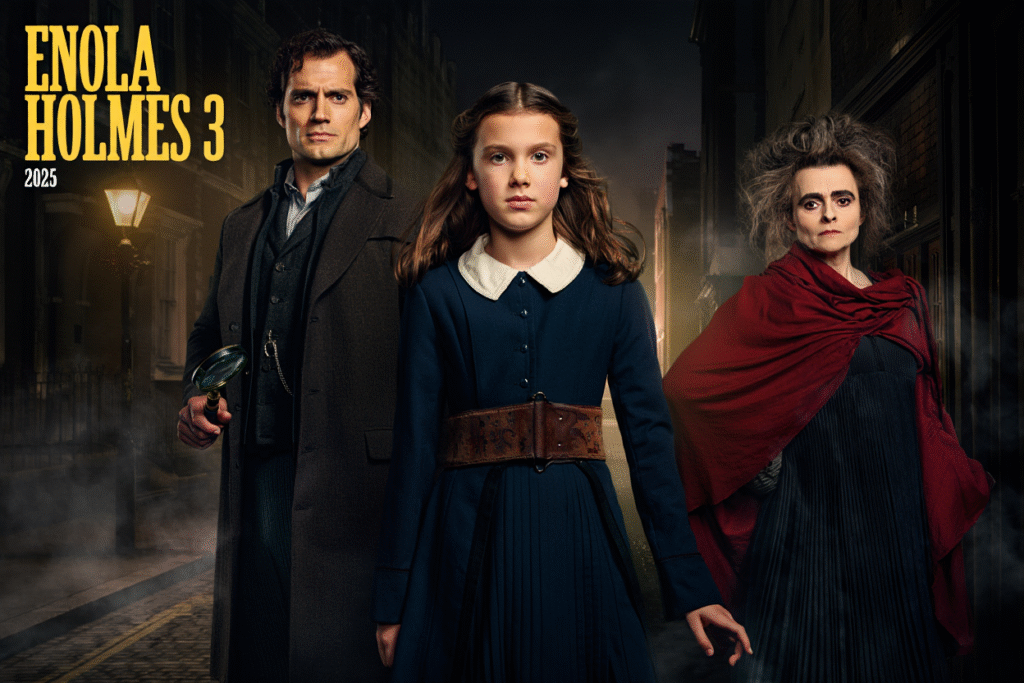
By the final act, the mystery becomes secondary to the emotional reckoning. Enola doesn’t “win” in the traditional sense—she survives with knowledge that can’t be unlearned. The closing moments are quiet, heavy, and deeply resonant, signaling that childhood idealism has officially ended.
⭐ Final Verdict
Enola Holmes 3 is a daring evolution of the series—intelligent, tense, and morally complex. It trades charm for consequence and mystery for meaning, rewarding viewers willing to sit with discomfort. This is Enola Holmes grown up, staring directly at the cost of truth.
Henry Cavill’s Sherlock is colder, more distant, and more unsettling than ever. His methodical pursuit of truth strips emotion from morality, leading him to a conclusion that feels logical—but devastating. The contrast between Enola’s empathy and Sherlock’s detachment becomes the film’s emotional fault line, turning their sibling bond into a philosophical conflict rather than a familial one.
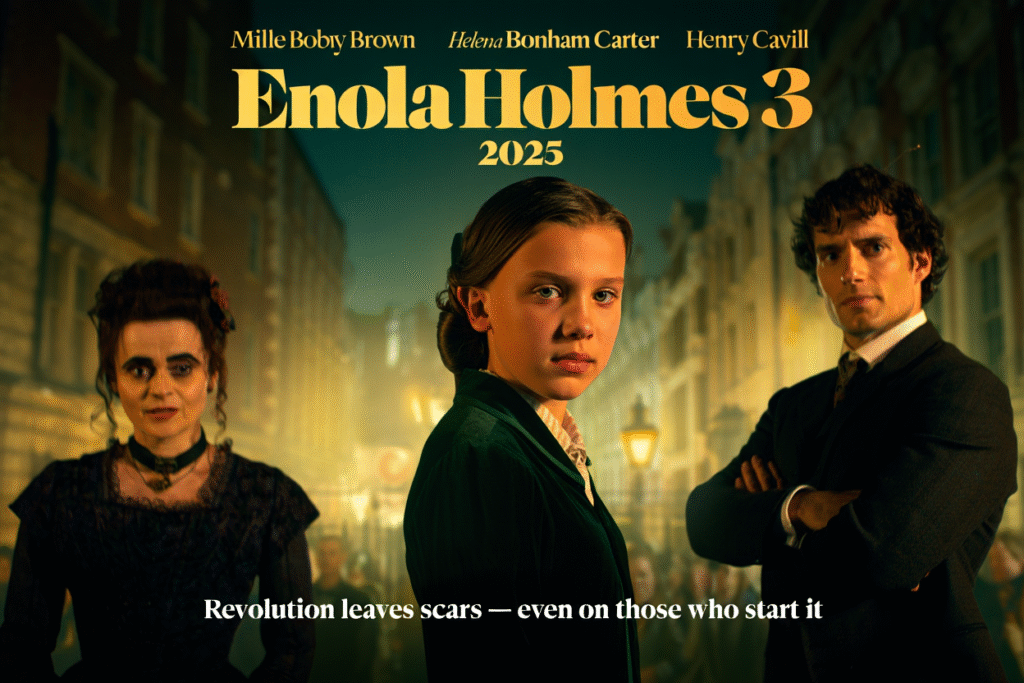
Director Philip Barantini brings a grounded intensity to the film, using shadow-heavy cinematography, long tension-filled sequences, and minimal exposition. Messages are hidden in glances, silences, and unfinished sentences. The world feels constantly watched, reinforcing the idea that power doesn’t always announce itself—it observes and waits.
What truly elevates Enola Holmes 3 is its refusal to provide easy answers. Betrayal isn’t villainized—it’s contextualized. Justice isn’t victorious—it’s compromised. The film understands that political change is rarely clean, and that progress often leaves casualties history prefers to forget.
Watch movie:

*Content is hosted on a partner site.