VERITY (2026) is not just a psychological thriller—it’s a suffocating experience, one that crawls under your skin and refuses to leave. Adapted from Colleen Hoover’s haunting novel, the film leans heavily into atmosphere, dread, and moral ambiguity, crafting a story where every page turned feels like a step closer to madness.
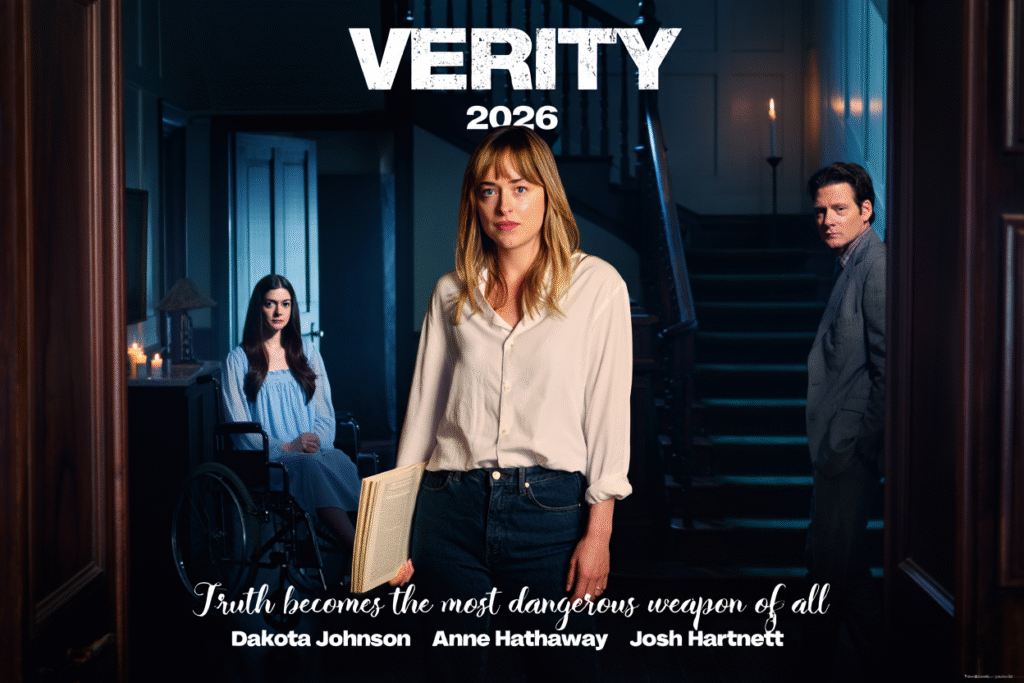
Dakota Johnson delivers a quietly unsettling performance as Lowen Ashleigh, a writer drowning in grief, financial desperation, and self-doubt. When she accepts the offer to complete the bestselling novels of Verity Crawford, it feels less like a career opportunity and more like a lifeline. From the very first moments inside the Crawfords’ isolated mansion, the film makes it clear: this house remembers everything.
Anne Hathaway is chillingly brilliant as Verity Crawford. Though confined to a bed, seemingly trapped in a broken body, her presence dominates every frame. Her silence is oppressive, her stillness unnerving. Hathaway weaponizes absence, turning Verity into a constant question mark—victim, monster, or something far more terrifying in between.
The discovery of the hidden manuscript marks the film’s turning point. As Lowen reads Verity’s unfiltered confession, the screen becomes a battleground between truth and manipulation. The words drip with cruelty, obsession, and maternal darkness, forcing both Lowen and the audience to confront an impossible question: can a story be so vile that it must be real?
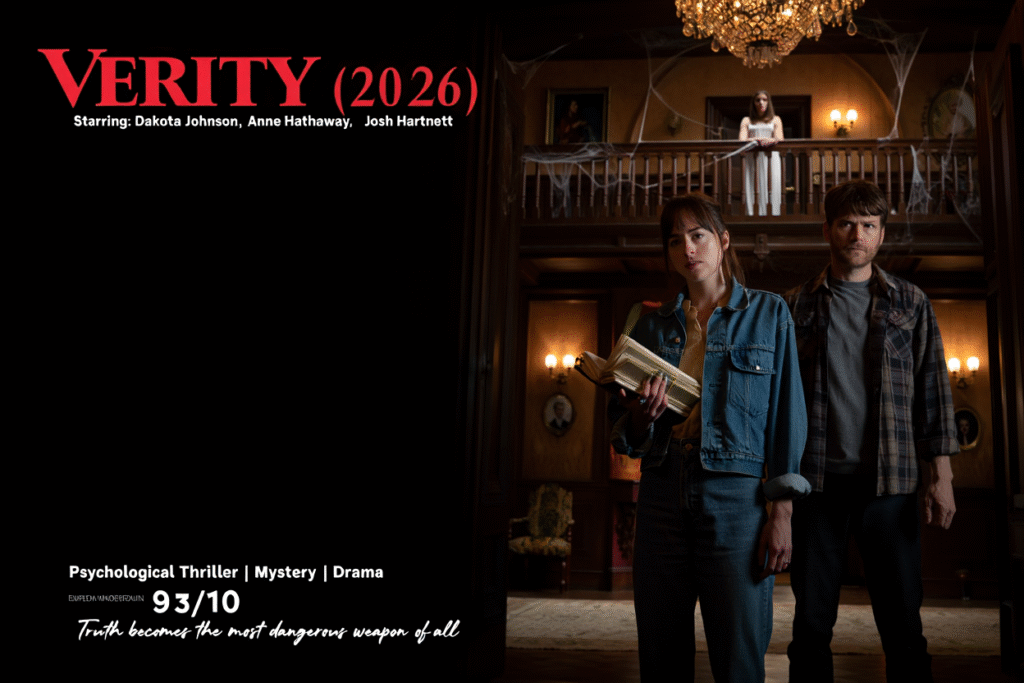
Josh Hartnett’s Jeremy Crawford adds another layer of danger to the narrative. He is gentle, grieving, and heartbreakingly human—yet there’s something fractured beneath the surface. His chemistry with Dakota Johnson is intimate but uneasy, blurring the line between comfort and emotional escape. Every interaction feels loaded with unsaid truths.
Director and cinematography work together to create a claustrophobic nightmare. Long hallways, creaking floors, half-lit rooms, and lingering shots amplify the paranoia. The mansion itself becomes a living entity—watching, listening, and waiting. Silence is used as a weapon, often more terrifying than any jump scare.
What makes VERITY truly effective is its refusal to provide easy answers. The film thrives in ambiguity, forcing viewers to wrestle with unreliable narrators, moral compromise, and the unsettling power of storytelling. Is the manuscript a confession—or a calculated manipulation designed to destroy everyone who reads it?
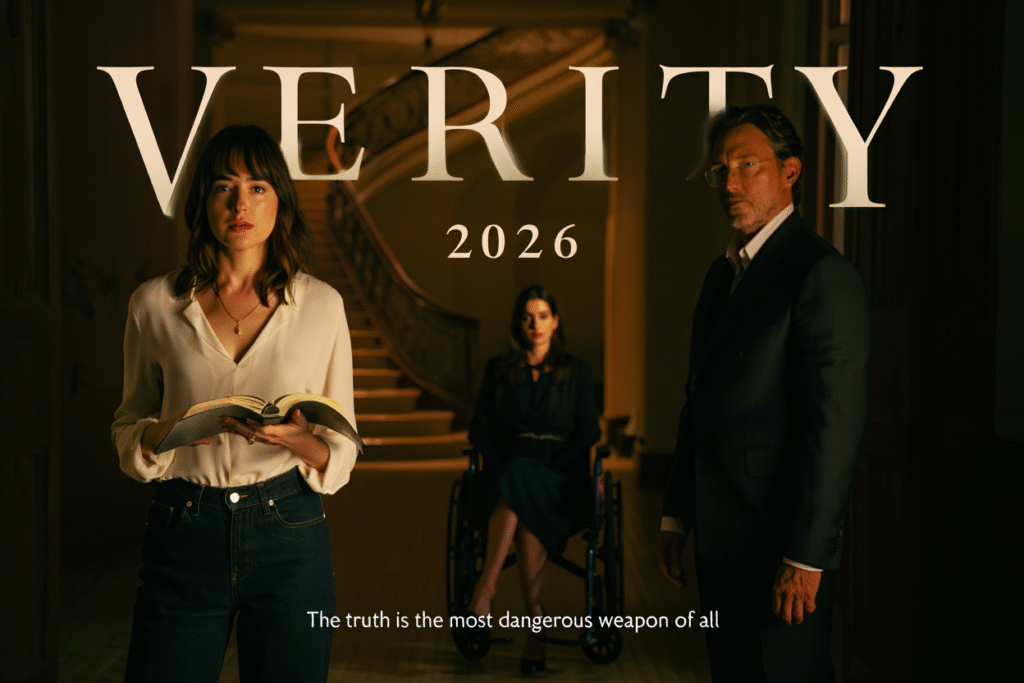
The psychological descent of Lowen is portrayed with painful precision. As obsession takes hold, her identity begins to fracture. The film explores how trauma, loneliness, and desire can distort perception, turning curiosity into compulsion and empathy into danger.
Motherhood, jealousy, and female rage are central themes woven carefully into the narrative. VERITY dares to explore the darker corners of love—the kind that doesn’t heal, but consumes. It asks uncomfortable questions about how far someone might go to protect a version of themselves they refuse to let die.
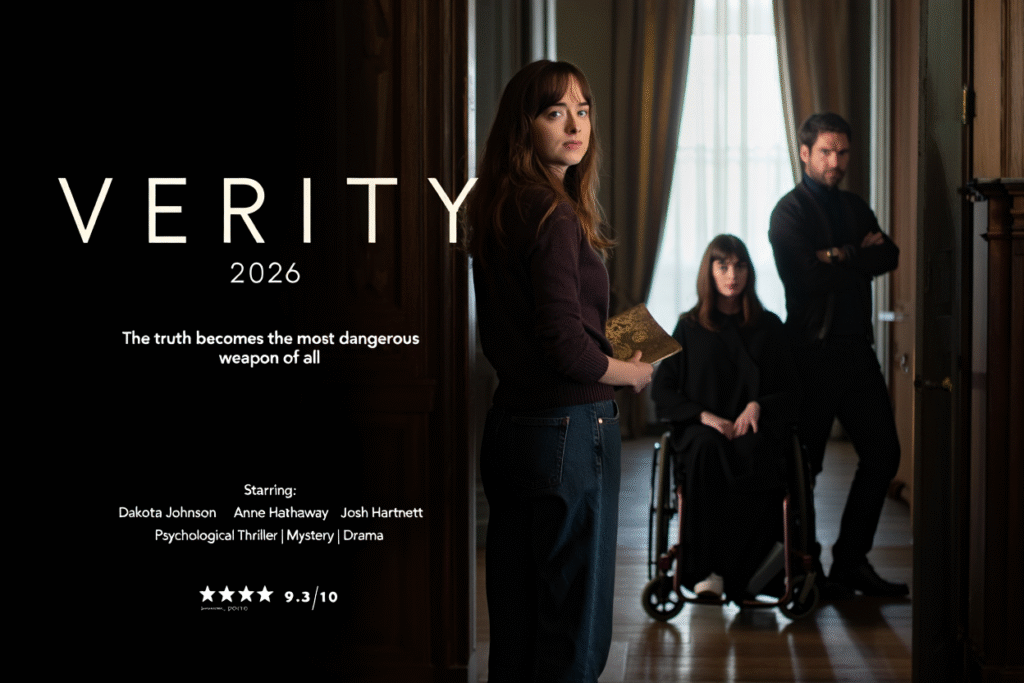
The final act is devastatingly quiet yet explosive in meaning. Rather than relying on spectacle, the film delivers its blow through revelation, choice, and consequence. The ending lingers long after the screen fades to black, inviting debate, doubt, and unease.
⭐ Verdict: VERITY (2026) is a masterclass in slow-burn psychological horror—intimate, disturbing, and relentlessly tense. With powerhouse performances and an atmosphere thick with paranoia, it proves that sometimes the most frightening monsters are the stories we choose to believe. ★★★★★ (9.3/10)
Watch movie:

*Content is hosted on a partner site.